
Order Fulfillment Services: A Guide for 2026
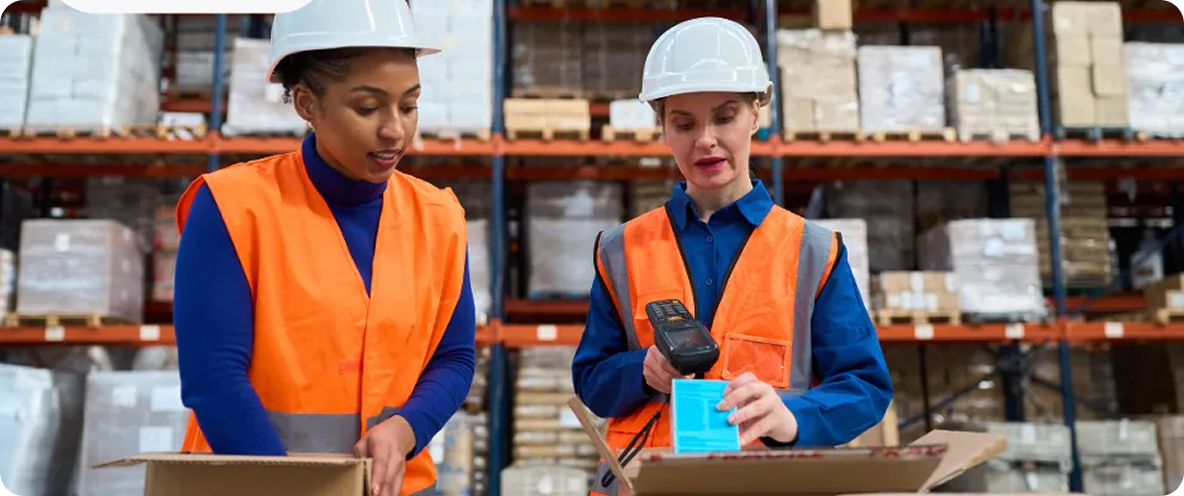
The way online orders reach customers has become one of the most important factors in e-commerce success. As delivery expectations rise and margins tighten, order fulfillment services are no longer a background operation. They are the engine behind customer satisfaction, repeat purchases and sustainable growth.
The global e-commerce fulfillment services market was valued at approximately $123.68 billion in 2024 and is projected to reach $272.14 billion by 2030, growing at a CAGR of 14.2% (Grand View Research, 2024). In North America alone, the market reached $47.57 billion in 2025 (Mordor Intelligence, 2025). These numbers reflect a clear trend: businesses of all sizes are investing more heavily in how their products move from warehouse shelves to customer doorsteps.
Whether you are running a Shopify store processing a few hundred orders per month or managing a growing multi-channel operation, understanding how order fulfillment services work and what to look for in a provider can save you time, money and a lot of frustration.
Key Takeaways
- Order fulfillment services handle the entire post-purchase process, from storage and picking to packing and shipping, so you can focus on growing your business.
- Outsourcing fulfillment to a third-party logistics (3PL) provider typically becomes cost-effective once you exceed a few hundred orders per month.
- Warehouse location directly affects delivery speed and shipping costs. Multi-location networks can reduce transit times by 30% or more.
- Platform integration with tools like Shopify and WooCommerce eliminates manual order entry and reduces fulfillment errors.
- Transparent pricing and responsive customer support are two of the most overlooked factors when choosing a fulfillment partner, yet they are often the most important.
What Are Order Fulfillment Services?
Order fulfillment services encompass the entire process of receiving, processing and delivering orders to customers after a purchase is made online. This includes warehousing, inventory management, order picking, packing, shipping and returns handling.
Think of it this way: when a customer clicks “Buy Now” on your store, everything that happens between that moment and the package arriving at their door is fulfillment. For small to mid-size e-commerce sellers, managing this process in-house eventually becomes a bottleneck. That is where third-party fulfillment providers come in.
Typical 3PL Fulfillment Costs
| Fee Type | Typical Range | What to Watch For |
|---|---|---|
| Storage | $0.50 – $2.00 / cu ft / month | Long-term storage surcharges |
| Pick and Pack | $2.00 – $8.00 / order | Extra fees per additional item |
| Receiving | $25 – $50 / pallet | Per-unit vs. per-pallet pricing |
| Shipping | Varies by carrier and zone | Dimensional weight pricing |
| Returns | $2.00 – $5.00 / item | Restocking and inspection fees |
A fulfillment center is different from a traditional warehouse. While a warehouse simply stores products, a fulfillment center is designed for movement. Products arrive in bulk, get organized into pick-ready locations and ship out as individual orders, often on the same day.
How the Order Fulfillment Process Works
Understanding the fulfillment workflow helps you evaluate providers more effectively. The process typically includes four key stages:
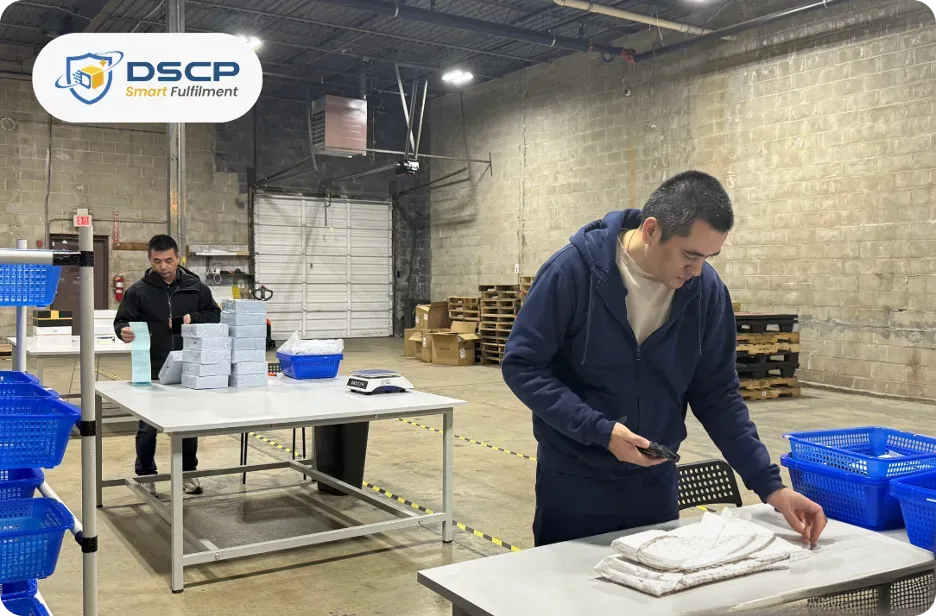
- Receiving and inventory storage. Your products are shipped to the fulfillment center in bulk. The provider receives, inspects and catalogs each item into their warehouse management system (WMS). Errors at this stage cascade into every subsequent order, so accuracy here is critical.
- Order processing. When a customer places an order, it is automatically transmitted to the fulfillment center through a platform integration. The WMS assigns the order to a warehouse associate who picks the correct items.
- Picking, packing and shipping. Items are verified for accuracy, packed to your specifications (including branded packaging or inserts if needed) and handed off to the optimal carrier. A tracking number is automatically generated and sent to your customer.
- Returns management. The National Retail Federation reported that 16.5% of merchandise purchased online was returned in 2023. A good fulfillment partner handles reverse logistics end to end: receiving, inspecting, restocking and updating your inventory in real time.
Why E-commerce Businesses Outsource Fulfillment
There comes a point in every growing e-commerce business when packing orders from a spare room or garage stops being practical. As a frequently discussed topic in communities like r/ecommerce and r/Shopify on Reddit, many sellers report that the tipping point arrives somewhere between 100 and 500 orders per month. At that volume, the time spent on logistics starts pulling attention away from marketing, product development and customer service. A common theme across these discussions is that founders often wish they had outsourced sooner, before fulfillment errors started damaging their reviews (Reddit, r/ecommerce).
Here are some of the core reasons businesses turn to professional order fulfillment services:
- Faster delivery times. Fulfillment centers with strategically placed warehouses can reach most US customers within 2 to 4 days via ground shipping, eliminating the need for expensive expedited options.
- Lower shipping costs. 3PL providers ship millions of packages and negotiate volume-based carrier discounts that individual sellers cannot access independently.
- Operational focus. Every hour you spend packing boxes is an hour not spent on growth. Outsourcing returns that time to higher-value activities.
- Scalability during peak seasons. Professional fulfillment centers are built to handle volume surges during events like Black Friday or product launches, without the stress of hiring temporary staff or finding overflow storage.
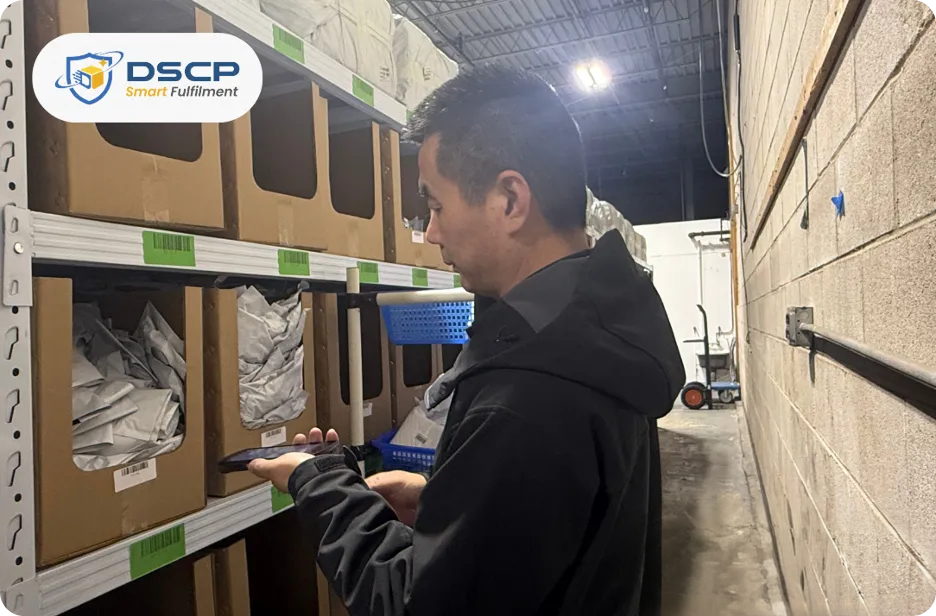
- Reduced error rates. Established providers using WMS technology and barcode scanning maintain order accuracy rates above 99%, significantly reducing costly mispicks and returns.
What to Look for in an Order Fulfillment Provider
Not every 3PL is the right fit for every business. The provider that works for an enterprise brand shipping 10,000 orders daily may be wrong for a growing Shopify seller doing 300 per month. Here are the factors that matter most.
The first is the warehouse location. Geography is one of the biggest drivers of delivery speed and cost. A single warehouse on the West Coast means East Coast customers may wait 5 to 7 days. Providers with fulfillment centers on both coasts, such as in California and New Jersey, can cover the majority of the US population within a 2 to 4-day ground shipping window.
In-House vs. Outsourced Fulfillment
| In-House Fulfillment | Outsourced to a 3PL |
|---|---|
| Full control over packing | Hands-off daily operations |
| Limited to one location | Multi-warehouse coverage |
| Higher per-unit shipping costs | Volume carrier discounts |
| Hard to scale during peaks | Built for volume surges |
| Founder time spent on logistics | Founder time spent on growth |
Technology and platform integration are equally important. Your provider should integrate seamlessly with Shopify, WooCommerce, Amazon, or whichever channels you sell through. Real-time inventory syncing prevents overselling and ensures orders flow automatically without manual data entry.
Transparent pricing protects your margins. Hidden fees are one of the most common complaints sellers have. Average industry costs include storage fees ranging from $0.50 to $2.00 per cubic foot monthly and pick and pack fees between $2 and $8 per order (Shopify, 2024). A trustworthy provider shares their complete fee structure upfront.
Responsive customer support matters more than most sellers expect. Dedicated account managers, multiple contact channels and fast resolution times are essential, especially for small to mid-size businesses where every customer interaction carries outsized weight.
Finally, quality control and accuracy determine how customers perceive your brand. Every mispicked order or late shipment reflects on you, not on the warehouse. Ask about order accuracy rates and how the provider handles exceptions.
A Real-World Snapshot: From Overwhelmed to Optimized
Consider a scenario many growing e-commerce sellers will recognize. A Shopify store selling jewelry and accessories grows from 50 orders per month to over 400 in less than a year. The founder, still packing orders from a home office, starts seeing shipping errors, delayed dispatches and frustrated customers leaving negative reviews.
After switching to a fulfillment partner with warehouses in Los Angeles and New Jersey, the results are immediate. Orders placed before the daily cutoff ship the same day. Customers on both coasts receive packages within 2 to 3 days. The founder reclaims 15 to 20 hours per week and redirects that time toward marketing and product launches. Return rates drop because products are packed consistently and professionally.
This is the kind of transformation that professional order fulfillment services enable. It is not about handing off control; it is about gaining the infrastructure to scale without operational chaos.
What Real Clients Say: Trustpilot Reviews
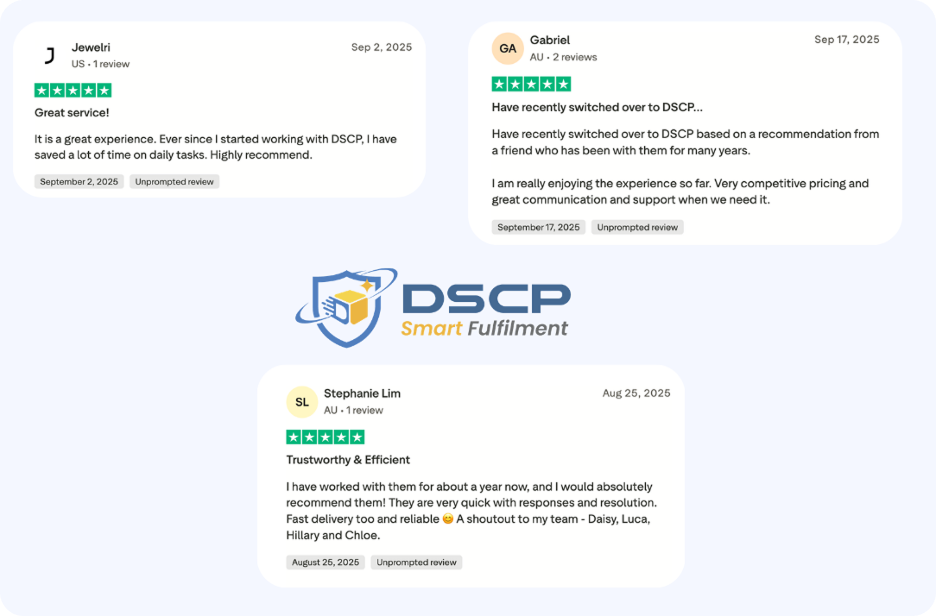
Choosing a fulfillment partner requires trust, and hearing from real businesses that have already made that decision can help. Here is what some clients of DSCP Smart Fulfillment have shared on Trustpilot.
One e-commerce seller from the US, operating under the brand Jewelri, described their experience as a significant time-saver. Since partnering with DSCP Smart Fulfillment, they noted that daily operational tasks became far more manageable, freeing up time to focus on other priorities. Their recommendation was straightforward and enthusiastic.
An Australian-based seller, Stephanie Lim, highlighted both the reliability and speed of service after working with the team for about a year. She specifically praised the quick response times when issues arose and called out several team members by name for their consistent support. For her, the combination of trustworthiness and efficiency made the partnership a clear win.
Another client, Gabriel from Australia, switched to DSCP Smart Fulfillment based on a friend’s recommendation after that friend had been a long-term client for years. He emphasized the competitive pricing, strong communication and availability of support whenever his team needed it. The word-of-mouth referral and his own positive experience speak to the kind of long-term relationships the company builds.
These reviews reflect a consistent theme: reliable service, responsive communication and a partnership approach that helps businesses grow without the typical fulfillment headaches.
Shopify Integration: Streamlining Your Fulfillment
For Shopify store owners, integration quality can make or break a fulfillment partnership. DSCP Smart Fulfillment offers a dedicated Shopify app that connects directly to your store for automated order processing. Orders sync in real time, inventory updates automatically and tracking information flows back to your customers without any manual input.
This kind of native integration eliminates the copy-paste workflows that cause errors and delays. It also gives you a centralized view of your fulfillment performance, so you can make data-driven decisions about inventory, shipping and customer experience.

Ready to Upgrade Your Fulfillment?
If logistics is consuming more of your time than growth, it may be time to explore professional order fulfillment services. Contact with DSCP Smart Fulfillment and see how the right partner can simplify your operations.
Conclusion
Order fulfillment services have evolved from simple storage-and-shipping operations into a strategic infrastructure that directly shapes customer experience and business growth. For small to mid-size e-commerce sellers, the right fulfillment partner provides faster delivery, lower costs and the operational freedom to focus on what actually drives revenue
The most important factors remain consistent: warehouse locations that match your customer base, seamless technology integration, transparent pricing and a support team that treats your business like their own. Sellers who invest in reliable fulfillment infrastructure now will be best positioned to compete and scale in the years ahead.
When and How to Split Inventory Between Warehouses
Splitting inventory across two warehouses cuts shipping zones and delivery times, but only for the right products. Which to split, and how to divide them.
Shipping Zones Explained for Ecommerce Brands
A shipping zone measures distance from where your parcel starts, so the same customer can be Zone 1 from one warehouse and Zone 8 from another. Here is how it works.