
Shipping Manifests Explained for Online Sellers

If you ship products internationally or receive bulk inventory from overseas suppliers, there is one document that quietly keeps everything moving: the shipping manifest. It is the detailed record of every item loaded onto a vessel, truck, or aircraft for transport. When it is accurate, your goods clear customs smoothly and arrive on schedule. When it is not, the consequences are immediate: held shipments, unexpected fees and frustrated customers.
Missing documentation accounts for roughly 80% of international shipping delays (Easyship, 2025). For e-commerce businesses importing products for resale or shipping orders across borders, understanding what a shipping manifest is and how to prepare one correctly is not optional. It is a practical skill that directly protects your delivery timelines and your bottom line.
This guide explains what a shipping manifest contains, the different types you may encounter, how it differs from other shipping documents and the steps you can take to get it right every time.

Key Takeaways for Shipping Manifest
- A shipping manifest is a document listing all goods in a shipment, including product descriptions, quantities, weights, and consignee details. It is required for customs clearance and logistics coordination.
- Inaccurate or incomplete manifests can result in customs holds, fines of up to $5,000 per violation in the US, and significant delivery delays.
- Shipping manifests differ from bills of lading. The manifest is a comprehensive cargo inventory; the bill of lading is a legal contract between shipper and carrier.
- Common manifest types include cargo manifests, import general manifests, container manifests and dangerous goods manifests.
- Working with a 3PL or freight forwarder experienced in international documentation reduces the risk of errors and speeds up the customs clearance process.
What Is a Shipping Manifest?
A shipping manifest is a formal document that lists all the goods loaded onto a vessel, vehicle, or aircraft for a specific shipment. It provides a complete inventory of the cargo, including product descriptions, quantities, weights, dimensions, packaging details, the shipper’s information, the consignee’s details and the origin and destination of the goods.

Customs authorities rely on the manifest to verify what is entering or leaving a country. They use it to assess duties and taxes, enforce import and export regulations and identify any restricted or prohibited items. Without a properly prepared manifest, your shipment cannot clear customs. In the United States, the Customs and Border Protection (CBP) agency requires manifests to be submitted before a vessel arrives at port, giving authorities time to review the cargo in advance (Wikipedia, 2026).
Beyond customs, the manifest serves several other practical functions:
- It acts as a tracking reference, allowing all parties in the supply chain to verify what was shipped against what was received
- It supports insurance claims by providing a documented record of the cargo in case of loss or damage during transit
- It helps carriers plan resources, ensuring they have the right equipment and personnel to handle the shipment safely
For e-commerce businesses that source products internationally, the shipping manifest is the document that connects your supplier’s warehouse to your fulfillment center. Getting it right means your inventory moves efficiently. Getting it wrong means delays, additional costs and potentially angry customers waiting for orders stuck at a port.

Types of Shipping Manifests
Not all shipments require the same documentation. The type of manifest you need depends on what you are shipping, how you are shipping it and where it is going.
Cargo or Freight Manifest
This is the most common type. It lists all goods on a vessel or vehicle for a particular voyage, including quantities, weights and descriptions. Freight manifests are used for bulk shipments and typically include freight charges as well.
Import General Manifest (IGM)
An IGM is filed with the customs department of the importing country. It must be submitted within 24 hours of a vessel’s arrival at port. Goods cannot be unloaded until the IGM is processed and customs clearance is complete. For sellers importing inventory into the US, this is one of the most important documents in the process.
Container Manifest
Each container on a ship requires its own manifest detailing the contents, loading sequence, port of origin and destination port. If you are shipping a full container load (FCL) of inventory, this document will be specific to your cargo.
Dangerous Goods Manifest
If your shipment contains hazardous materials (batteries, flammable liquids, certain chemicals), a separate dangerous goods manifest is required. This document must be easily accessible to emergency personnel and is regulated in the US by the Department of Homeland Security.
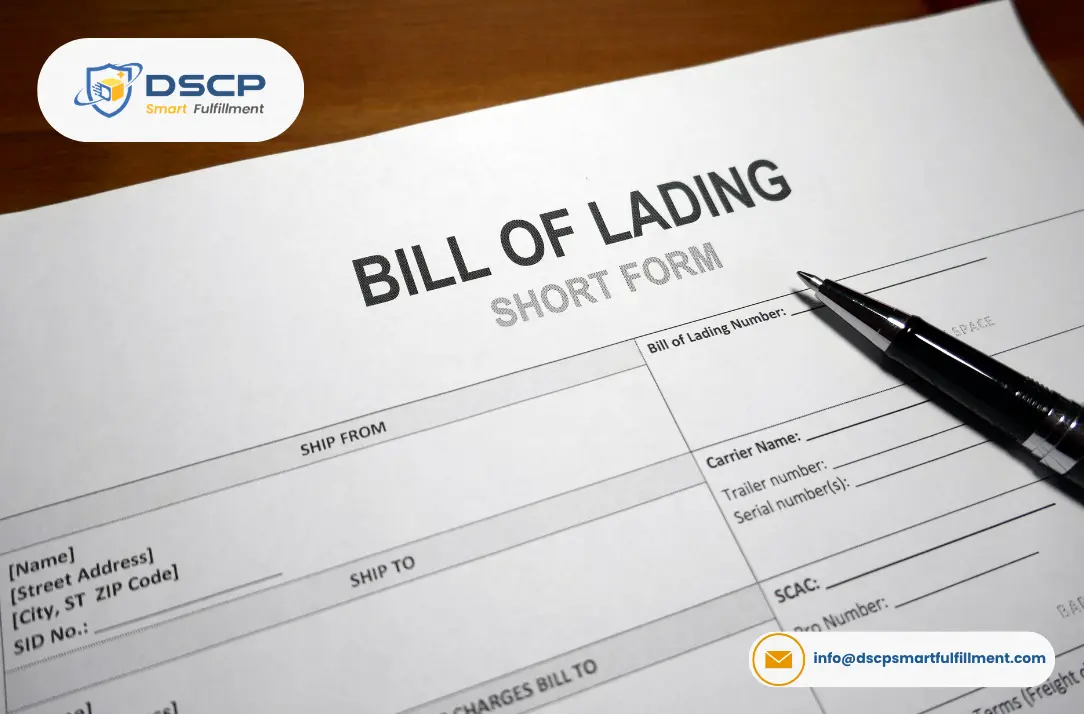
Shipping Manifest vs Bill of Lading: What Is the Difference?
These two documents are frequently confused, but they serve different purposes and are not interchangeable.
A shipping manifest is a comprehensive list of all cargo on a vessel. It provides an overview of everything being transported, regardless of how many individual shippers or consignees are involved. It is primarily used for customs, operational planning and cargo verification.
| Feature | Shipping Manifest | Bill of Lading |
|---|---|---|
| Purpose | Comprehensive inventory of all cargo on a vessel | Legal contract between shipper and carrier for one shipment |
| Scope | Covers all goods from all shippers on the vessel | Covers one individual shipment only |
| Legal Status | Operational and regulatory document | Legally binding contract and document of title |
| Transfers Ownership | No | Yes, can transfer ownership of goods |
| Used By | Customs authorities, carriers and port operators | Shippers, carriers, consignees and banks |
| When Filed | Before vessel arrives at port (24 hours in advance for US) | At time of shipment booking and cargo receipt |
A bill of lading (B/L) is a legal contract between the shipper and the carrier for an individual shipment. It acts as a receipt confirming the carrier has received the goods, outlines the terms of transport and can serve as a document of title that transfers ownership of the goods. A single vessel may carry dozens of individual bills of lading, but there will be one master manifest covering all cargo on board.
In simple terms, the manifest tells customs and logistics teams what is on the ship. The bill of lading tells them who owns each shipment and under what terms it is being transported. Both documents are essential, and both must be accurate.

What Information Goes Into a Shipping Manifest?
A complete shipping manifest typically includes the following details:
- Product descriptions for every item in the shipment, including names, categories and any relevant identification codes
- Quantities, individual weights and total shipment weight
- Package dimensions and packaging type (cartons, pallets, crates)
- Harmonized System (HS) codes for each product, which customs authorities use to classify goods and calculate duties
- The shipper’s full company name, address and contact information
- The consignee’s full company name, address and contact information
- Port of origin and destination port
- Carrier name and vessel or vehicle identification
- Shipment tracking or reference numbers
- Declared value of the goods
- Special handling instructions (temperature requirements, fragile items, hazardous materials)
The level of detail matters. On Quora, an experienced customs professional explained that the most common reason for delays is that importers simply are not prepared: they do not have all their commercial documents together and are unaware of all the regulations covering their specific products (Quora, customs clearance discussion). Every field left incomplete or filled inaccurately creates an opportunity for your shipment to be flagged, inspected, or held.
Common Manifest Mistakes and How to Avoid Them
Incomplete or Inaccurate Product Descriptions
Vague descriptions like “household items” or “electronics” are red flags for customs officers. Be specific. Instead of “electronics,” write “Bluetooth wireless earbuds, model XYZ, quantity 500, unit weight 45g.” The more precise your descriptions, the faster your goods move through inspection.
Incorrect HS Codes
Using the wrong Harmonized System code can result in incorrect duty calculations, additional inspections, or rejection at the border. If you are unsure about the correct code for your product, consult with your freight forwarder or customs broker before submitting the manifest.
Mismatched Documentation
If the quantities on your manifest do not match your packing list or commercial invoice, customs will flag the discrepancy. Double-check that all documents align before shipping. Even small differences in declared weight or item count can trigger a hold.
Missing Special Handling Declarations
If your shipment contains lithium batteries, liquids, or any regulated materials and you do not declare them on the manifest, you risk fines and seizure. In the US, providing inaccurate manifests can result in penalties of up to $5,000 per violation (Shipium, 2025).

How a 3PL Partner Simplifies Manifest Management
For e-commerce brands scaling internationally, managing shipping documentation in-house becomes increasingly complex. A single manifest error can cascade into days of delays, unexpected storage fees at port and missed delivery promises to customers.
This is one of the reasons many online sellers work with a 3PL provider or freight forwarder who has expertise in international logistics documentation. A qualified partner handles manifest preparation, ensures accuracy across all supporting documents and coordinates with customs brokers to keep your cargo moving.
For brands shipping products across borders, partnering with a fulfillment provider that understands cross-border logistics means you are not navigating customs paperwork alone. At DSCP Smart Fulfillment, we manage the documentation and coordination that keeps international shipments on schedule so you can focus on selling, not paperwork.
Conclusion
A shipping manifest may not be the most exciting part of running an e-commerce business, but it is one of the most consequential. It is the document that customs authorities, carriers and your own receiving team rely on to verify what is in a shipment and whether it is cleared to move forward.
Getting it right means faster customs clearance, fewer delays and a smoother path from your supplier’s factory to your customer’s doorstep. Getting it wrong means held cargo, financial penalties and a breakdown in the delivery experience your customers expect.
Take the time to understand what goes into a manifest, use the correct HS codes, keep all documentation aligned and consider working with a logistics partner who can manage the process at scale. As your international shipping volume grows, this one document becomes the difference between a supply chain that works and one that stalls.

How to Import Cosmetics Into the US as a Foreign Company
A step-by-step guide for foreign beauty brands: who can be importer of record, the bond and agent rules for nonresident companies and what clearance really costs.

Cosmetic Labeling Requirements: What EU Brands Must Change
A practical checklist for EU beauty brands on US cosmetic labels: what to change, what you can keep and the second-language rule most brands never see coming.