In-House vs 3PL Fulfillment: A Cost Comparison for 2026
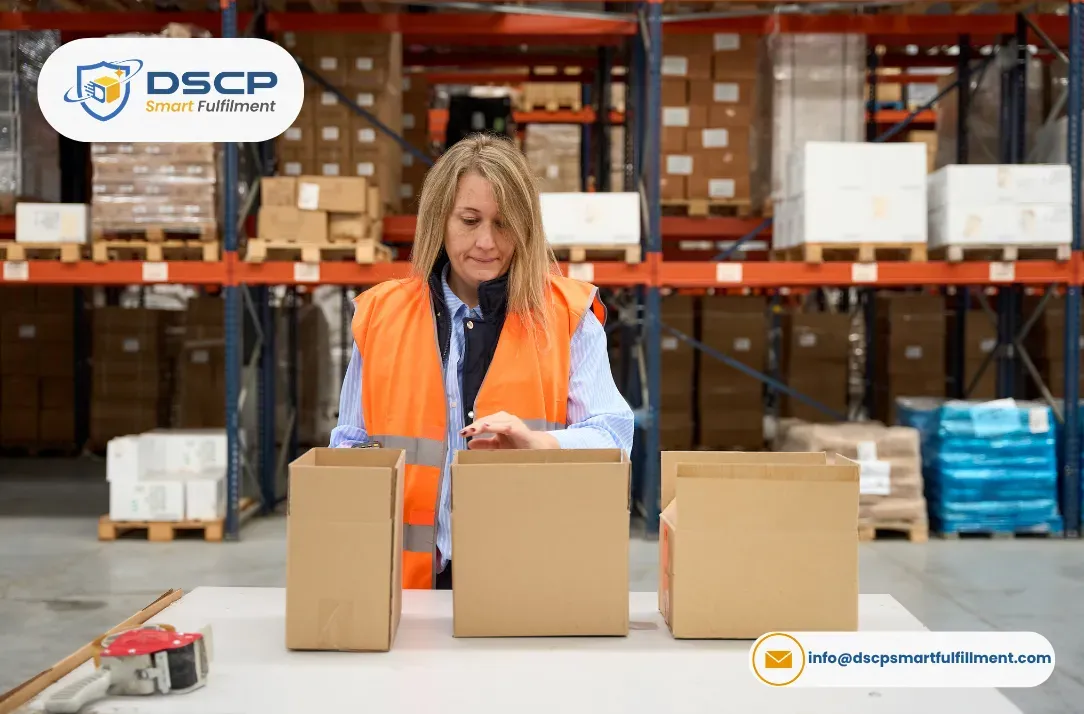
Packing orders yourself makes perfect sense when you are shipping ten or twenty packages a day. You see every product, you control every detail, and you know the operation inside out. But as sales climb, that hands-on approach quietly becomes one of the most expensive line items in your business.
The choice between in-house vs 3PL fulfillment shapes everything from your profit margins to your delivery speed and how you allocate your working hours. Yet most e-commerce sellers make this decision based on gut feeling rather than a proper cost analysis. This guide puts actual numbers behind both models so you can evaluate which approach serves your business better right now and over the next 12 months.

Key Takeaways for In-House vs 3PL Fulfillment
- Self-managed fulfillment carries more cost than most sellers measure once labor, rent, materials, carrier rates, and mistake-related expenses are included.
- Outsourcing to a 3PL provider typically becomes the more economical option once a business ships 500 or more orders per month consistently (Digital Applied, 2026).
- Third-party logistics providers secure carrier rates 15 to 40 percent below what individual merchants pay at retail, and those savings frequently cover the provider’s fees on their own.
- For direct-to-consumer brands, fulfillment represents roughly 10 to 15 percent of total revenue, which means even modest efficiency improvements have a measurable impact on the bottom line.
- Neither model is universally better. The right choice depends on your current order volume, product characteristics, growth plans, and where your time creates the most value.
What Does In-House Fulfillment Actually Involve?
In-house fulfillment means your team owns every step after a customer clicks “buy.” You lease or maintain the warehouse space, hire the people who pick and pack orders, source your own packing materials, set up accounts with shipping carriers, and operate whatever software keeps your inventory accurate.
At lower volumes, this direct involvement is a strength. You catch issues early, you experiment with packaging, and you build an intuitive understanding of your product flow. Plenty of seven-figure e-commerce brands were built on kitchen tables and garage shelving.
The friction starts when order counts rise beyond what a small team can absorb. Each new layer of complexity, whether it is a second product line, a holiday rush, or an expansion into a new sales channel, demands more space, more hands, and more coordination. Those demands carry costs that grow faster than most founders anticipate.
In-House vs 3PL Fulfillment Comparison
| Factor | In-House Fulfillment | 3PL Fulfillment |
|---|---|---|
| Cost structure | Fixed overhead regardless of volume | Variable costs tied to order activity |
| Shipping rates | Retail pricing with no volume leverage | 15-40% below retail through carrier contracts |
| Order accuracy | 95-98% typical for manual operations | 99%+ with barcode scanning and verification |
| Delivery speed | Limited by single warehouse location | 2-4 days via multi-warehouse positioning |
| Scalability | Requires hiring, space and equipment | Scales instantly using existing infrastructure |
| Peak season handling | Temporary staff or overtime needed | Absorbed by provider’s workforce |
| Founder time | 20-30+ hours per week on logistics | Reclaimed for growth activities |
How Does 3PL Fulfillment Work?
A third-party logistics provider handles e-commerce fulfillment by operating the warehousing, picking, packing, and shipping infrastructure on your behalf. Your inventory is located at the provider’s fulfillment center. When an order lands on your store, the integration sends it directly to the 3PL’s system. Their team locates the product, packages it according to your specifications and hands it to a carrier. Tracking details flow back to your customer automatically.
The technology layer is what makes this seamless in practice. Platforms like Shopify, Amazon, and WooCommerce connect through built-in integrations that eliminate manual data entry and keep inventory counts synchronized across every channel you sell on.
For a deeper look at how the entire process works from receiving through delivery, our order fulfillment services guide covers each stage in detail.
Breaking Down the Real Cost of Handling Fulfillment Yourself
The expenses that sellers track, like shipping labels and box costs, represent only a fraction of what self-managed fulfillment actually consumes. A complete accounting reveals a much larger figure.
Labor and Opportunity Cost
Time is the single largest hidden expense. If processing each order takes 15 minutes and you ship 200 orders in a month, that is 50 hours dedicated to warehouse work. Even at conservative estimates, that time incurs a high cost. But the real price is what those 50 hours could have produced if directed toward acquiring customers, improving your product line, or negotiating better supplier terms.
Discussions in communities like r/ecommerce on Reddit frequently circle back to this realization. Sellers describe a turning point where they recognized they had been trading high-value strategic work for low-value repetitive tasks, and that the trade was quietly capping their growth (Reddit, r/ecommerce).
Rent and Facility Overhead
Every square foot your inventory occupies has a price, whether that is a formal warehouse lease or the spare room in your house that could otherwise generate rental income. Commercial warehouse space in the United States runs anywhere from $4 to $10 per square foot per year before utilities, insurance, and maintenance. As your catalog expands, so does the footprint you need, and expanding mid-lease is rarely simple or cheap.
Packing Materials
Cartons, poly mailers, void fill, tape, branded tissue, labels, and ink. Individually, these seem minor. Collectively, they add up to $200 to $400 per month for a business shipping a few hundred orders, and that estimate rises quickly for fragile or oversized products that need extra protection.
Carrier Rates at Retail Pricing
This is where the cost gap between self-managed and outsourced fulfillment becomes most visible. A merchant shipping 200 packages a month negotiates from a weak position. A 3PL shipping millions of parcels annually commands volume discounts that are simply unavailable to smaller shippers. That rate differential, commonly 15 to 40 percent on identical shipments (Digital Applied, 2026), often exceeds the service fee a 3PL charges for the entire fulfillment process.
Mistakes and Their Ripple Effects
No operation runs at 100 percent accuracy. Self-managed fulfillment typically sees error rates between 2 and 5 percent, and those errors are expensive. Each wrong item shipped means a replacement package, return shipping costs, customer service time and the risk of a negative review. The National Retail Federation reported a 16.5 percent return rate for online purchases in 2023, and a portion of those returns originates from fulfillment mistakes rather than product issues.
Systems and Technology
Barcode scanners, inventory tracking software, shipping platforms, and label printers. Running a reliable operation requires tools, and those tools come with purchase costs, subscription fees and a learning curve. Without them, accuracy suffers. With them, you are adding another layer of fixed expense.
How 3PL Pricing Is Structured
Instead of carrying fixed overhead regardless of sales volume, 3PL costs flex with your actual order activity. The standard fee categories include monthly storage (typically $0.50 to $2.00 per cubic foot), pick and pack per order ($2 to $8 depending on item count and complexity), receiving fees for inbound shipments and shipping at the provider’s negotiated carrier rates.
This variable structure protects your margins during slower months since you are not paying for empty warehouse space or idle staff. During peak periods, the 3PL absorbs the volume increase using its existing infrastructure and workforce, so you scale without scrambling to hire temporary help or find overflow storage.
Several cost categories also disappear entirely when you outsource: facility leases, equipment purchases, warehouse insurance, payroll management and fulfillment technology subscriptions. Those savings are real, even though they never appear as a credit on your 3PL invoice.
At What Point Does Outsourcing Make Financial Sense?
Industry benchmarks suggest the crossover point falls between 500 and 1,000 monthly orders for most product types. Below that range, the simplicity of managing your own operation often outweighs the fees. Above it, carrier discounts, labor efficiency and infrastructure savings tilt the economics clearly toward a 3PL (Digital Applied, 2026).
Volume is not the only indicator, though. Ask yourself whether any of the following apply to your current situation:
- Fulfillment tasks absorb more than 20 hours of your week.
- Shipping mistakes are becoming more frequent as volume increases.
- You operate from a single location and cannot offer competitive delivery times nationwide.
- Seasonal demand spikes create panic rather than excitement.
- Your storage space is full and the next step is a larger, more expensive lease.
- Customers are mentioning slow shipping or incorrect orders in their reviews.
If several of these resonate, the total cost of keeping fulfillment in-house is likely higher than a 3PL would charge, even if a simple per-order fee comparison suggests otherwise.
Typical Monthly Cost Breakdown (300 Orders/Month)
| Cost Category | In-House Estimate | 3PL Estimate |
|---|---|---|
| Labor | $2,000 – $2,500 | Included in pick and pack fee |
| Warehouse / Storage | $500 – $1,200 | $100 – $200 |
| Materials and supplies | $300 – $500 | Included or minimal fee |
| Pick and pack | Included in labor | $900 – $1,500 |
| Shipping | $2,400 (retail rates) | $1,500 – $1,800 (volume rates) |
| Technology and software | $100 – $200 | Included with provider |
| Error costs (2-5% rate) | $120 – $300 | Minimal (99%+ accuracy) |
| Estimated total | $5,420 – $7,100 | $2,500 – $3,500 |
| Estimated cost per order | $18 – $24 | $8 – $12 |
A Practical Example: What the Transition Looks Like in Practice
Renata Oliveira sells handmade candles and home fragrance products through her Shopify store. For 18 months, she managed fulfillment from a rented garage unit in New Jersey, handling roughly 400 orders per month during her busiest stretch.
Her monthly operating costs included $950 for the garage lease, around $600 in packing supplies (her products required careful wrapping), software subscriptions totaling $120, and approximately 30 hours per week of her own time picking, packing, and running to the carrier drop-off. She paid standard retail shipping rates because her volume was too low to negotiate discounts. When she calculated everything, including a modest hourly rate for her own labor, the true cost sat above $13 per order.
After moving her inventory to a fulfillment partner with warehouses on both US coasts, her all-in cost dropped to roughly $8.50 per order. Transit times shortened because inventory was now positioned near both East Coast and West Coast customers. Packing quality improved because the provider used standardized processes with verification checks at each step. And Renata redirected her 30 weekly hours into wholesale outreach and new product development, which led to a partnership with a regional boutique chain within three months.
What Clients Say About Making the Switch
Making the move from self-managed to outsourced fulfillment requires trust. Hearing from businesses that have been through the transition can help put the decision in context.
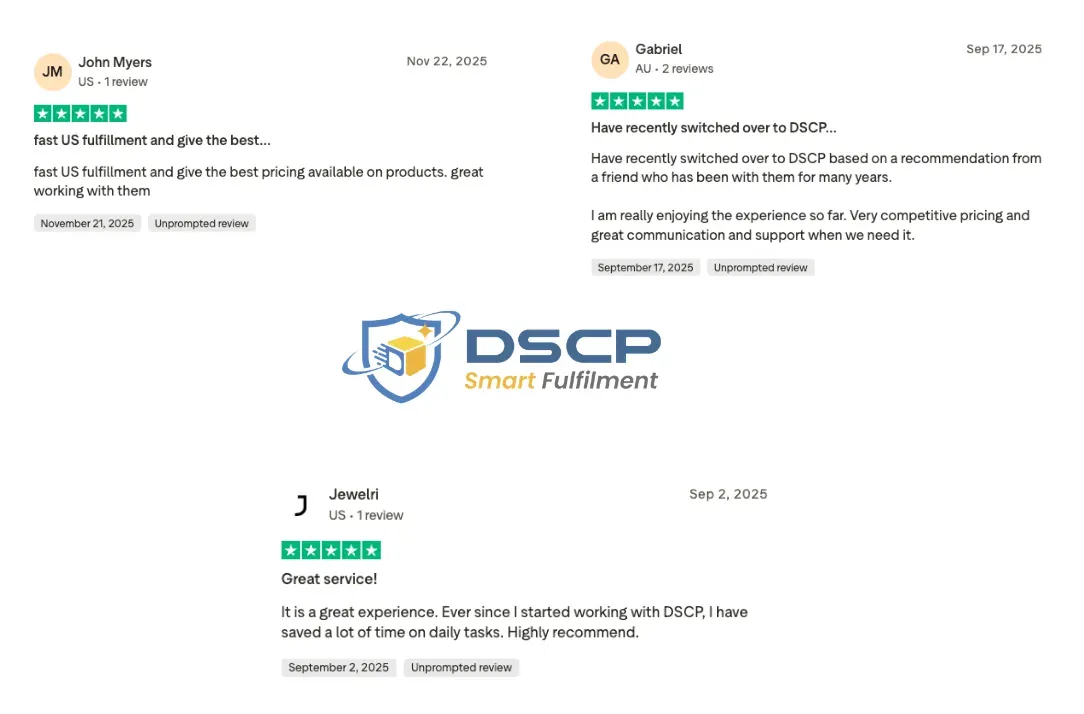
A US-based jewelry brand called Jewelri found that working with a professional fulfillment partner dramatically reduced the daily operational burden. Tasks that had previously consumed hours of the founder’s day became a streamlined background process, freeing the team to focus entirely on building the brand and acquiring customers.
Gabriel, an e-commerce seller based in Australia, chose to switch providers after a close friend who had been a long-term client for years recommended the service. He pointed to competitive pricing, dependable communication and accessible support whenever his team needed it. The personal referral and his own early experience reflected the kind of partnership that develops when a fulfillment provider treats clients as long-term collaborators rather than transactions.
John Myers, a US-based seller, highlighted two factors above all: fast fulfillment within the United States and strong product pricing. For his operation, having a partner that could process and ship orders quickly from domestic warehouses while keeping costs competitive was the combination that made outsourcing clearly worthwhile (Trustpilot, 2025).
Beyond the Numbers: What Else Changes When You Outsource
Cost comparison tells the financial story, but several non-financial factors also weigh on the decision.
Handling fulfillment yourself means you can personalize every package. If your brand depends on handwritten thank-you notes or a meticulously curated unboxing experience, that level of detail is easier to execute in-house. Some 3PL providers accommodate custom packaging and branded inserts, but the depth of personalization varies by partner, so it is worth asking specifically about your requirements.
Response speed is another consideration. When a problem surfaces in your own warehouse, you resolve it immediately. With a 3PL, resolution depends on their communication speed and internal processes. This is precisely why choosing a provider with dedicated account managers rather than anonymous support ticket systems makes a meaningful difference.
Where a 3PL gains a clear advantage is geographic coverage. Shipping every order from one location means longer transit times and higher costs for customers on the opposite side of the country. A provider with fulfillment centers in both California and New Jersey, for instance, can deliver to roughly 80 percent of the US population within 2 to 4 business days using standard ground shipping. That reach is nearly impossible to replicate with a single in-house warehouse.
For businesses that also source products internationally, pairing domestic 3PL warehousing with product sourcing and quality control creates a supply chain where goods are inspected overseas before arriving at US warehouses ready to ship. This integrated approach reduces both risk and lead times.
Brands selling to customers outside the United States can also benefit from cross-border fulfillment services that handle customs documentation, international carrier selection, and DDP delivery to simplify global expansion.

Ready to See How Your Costs Compare?
If logistics is consuming more of your time than growth activities, it is worth putting your numbers side by side. Request a quote from DSCP Smart Fulfillment to see how your current per-order costs stack up against a fully managed solution with US warehouses in California and New Jersey.
Conclusion
The in-house vs 3PL fulfillment decision comes down to a clear-eyed assessment of what your current operation truly costs and whether those resources could generate more value elsewhere. Running your own warehouse works well when volume is modest and direct control is a genuine competitive advantage. But for most growing e-commerce brands, there is a point where self-managed fulfillment shifts from being lean and efficient to being the bottleneck that prevents the next stage of growth.
Outsourcing does not simply reduce the cost of shipping a box. It repositions your time, your capital, and your attention toward the work that only you can do for your business. The brands that scale most successfully tend to recognize that inflection point early and act on it before fulfillment becomes a constraint rather than a function.