
Shipping From China to an East Coast Warehouse
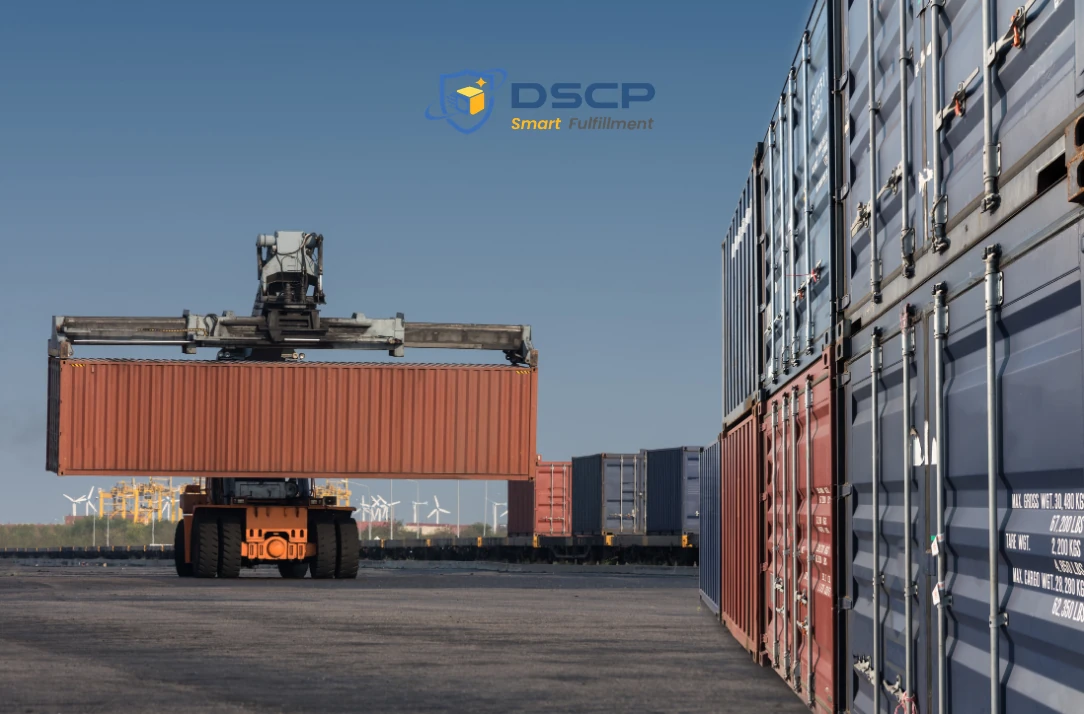
The Port of New York and New Jersey handled 8.9 million containers in 2025, its second-busiest year on record (Port Authority of New York and New Jersey, 2026). A good share of that is inventory belonging to online brands who have never seen a port, never booked a container, and only find out how the process works when something goes wrong in it.
Getting goods from a factory in China into a warehouse on the US East Coast is not one decision. It is a chain of them, and each one sets a date further down the line. This is the route end to end: how the cargo travels, which port it lands at, what has to be filed before the ship sails, who moves it off the dock, and what happens the day it reaches the warehouse.
Key Takeaways for Shipping From China to an East Coast Warehouse
- There are three practical routes from China to the East Coast: ocean on a faster service, ocean on a standard service, and air freight when speed matters more than cost.
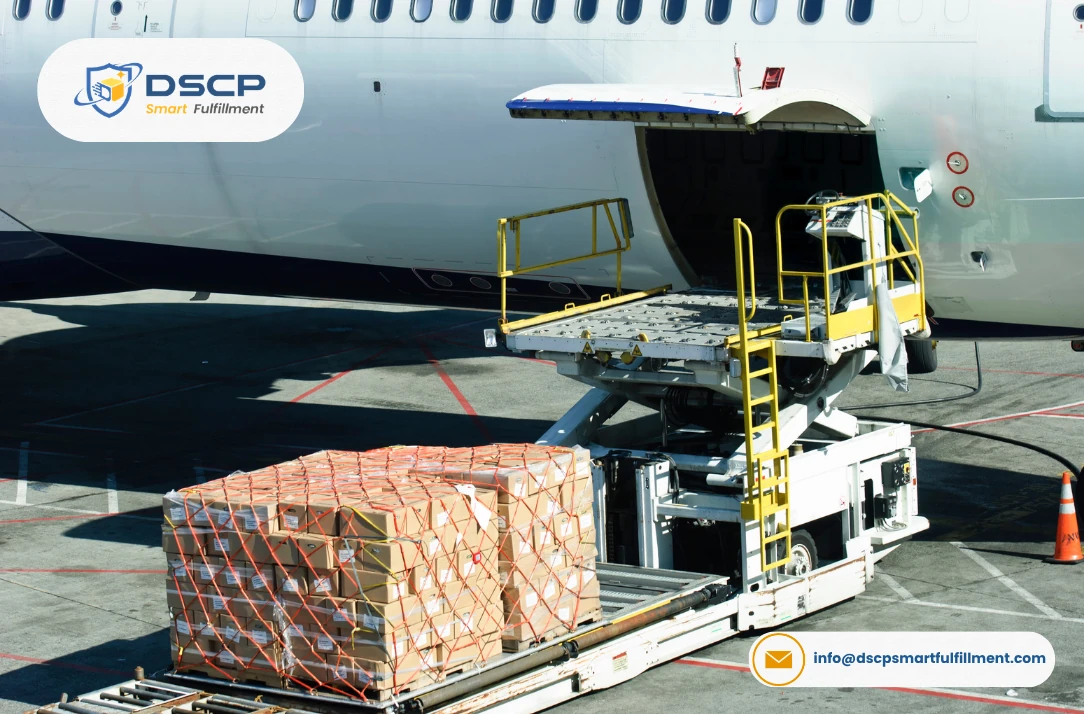
- DSCP Smart Fulfillment ships from Shanghai, Ningbo and Shenzhen into the Port of New York and New Jersey, roughly 15 days on a fast ocean service, about 35 days on a standard one, or 6 to 8 days by air.
- The Importer Security Filing has to be submitted before the vessel departs, not when it arrives, and missing it carries penalties (US Customs and Border Protection).
- Duties and tariffs sit outside your freight quote, so a landed cost built only on shipping will be wrong.
- Arriving at the port is not the finish line. Drayage, unloading and receiving all sit between the ship and your first sellable unit.
What Does It Take to Ship From China to an East Coast Warehouse?
Shipping from China to an East Coast warehouse means moving cargo from a Chinese factory to a US fulfillment facility on the eastern seaboard, usually by ocean freight into a port such as New York and New Jersey, Savannah or Norfolk, then by truck to the warehouse. The sequence is the same every time: the factory releases the goods, a forwarder books the vessel and files the customs paperwork before departure, the container crosses, customs clears it at the port of entry, a local truck moves it to the warehouse, and the warehouse receives, counts and puts the stock away before any of it can be sold.
Ocean freight takes roughly two to five weeks depending on the service, air freight takes under ten days at a much higher cost, and the gap between a container arriving and your inventory going live depends entirely on how fast the receiving warehouse works.
The Three Routes, and What Each One Costs You in Time
Every inbound shipment is a trade between money and calendar. These are the three options in practice, with the transit times we run on our own China to New Brunswick lane.
The twenty day gap between the two ocean services is the decision most brands get wrong. Standard ocean is the cheapest way to move a container and the right default for stock you planned months ago. The faster service earns its premium when you are replenishing something that is selling, because three extra weeks of being out of stock costs more than the freight difference. Air freight is rarely the plan and often the fix, for a launch that moved, a sample run, or a bestseller that sold through earlier than forecast.
Which Port Your Container Should Land At
The port is not a detail, it is the thing that decides how far your goods still have to travel after they arrive. New York and New Jersey, Savannah and Norfolk are the main eastern gateways, and the right one is simply whichever is closest to the warehouse holding your stock. A container landing at a port hours away from your facility adds trucking cost and a day or more before anything can be received.
This is where an east coast fulfillment center sited near its own port of entry pays off twice. Our New Brunswick warehouse sits a short run from the Port of New York and New Jersey, so the drayage leg is measured in hours rather than as a second journey. Brands sometimes discover the alternative the hard way: cargo routed through a West Coast port and railed across the country, which can work, but adds handoffs and rail time that a direct eastern arrival avoids entirely.
What Has to Happen Before the Ship Sails
Most inbound problems are created weeks before anyone notices them, because the paperwork deadline falls at departure rather than arrival.
The Importer Security Filing
US Customs and Border Protection requires an Importer Security Filing, commonly called ISF or 10+2, to be submitted for ocean shipments before the vessel leaves the origin port. It is filed by you or on your behalf, and late or missing filings draw penalties and can get a container held. The practical point for a brand: this deadline lands while your goods are still in China, so it depends on your supplier and forwarder getting details across in time, not on anything you can fix once the ship is moving.
Who owns the shipment, and from where
The terms you agree with your supplier decide where their responsibility stops and yours starts. Agreeing that the supplier delivers the goods onto the vessel, with your side handling everything after, is the common arrangement and it gives you control of the freight. An all-inclusive arrangement where the supplier delivers to your door is simpler to manage and harder to audit, because the freight, duty and handling are bundled into one figure you cannot break apart. Neither is wrong. What matters is knowing which one you signed, since it determines who files what.
Duties and tariffs are not in your freight quote
Import duties and any applicable tariffs are separate from what you pay to move the box, and they are owed by the importer of record. Rates depend on the product classification and change with trade policy, so treat any figure you were quoted months ago as out of date. Build landed cost as freight plus duty plus handling rather than freight alone, and confirm the current rate for your specific product classification before you commit to a purchase order.
From the Port to the Warehouse
Clearing customs is not arrival. The container still has to be collected from the terminal and trucked to the warehouse, a short leg called drayage, and if you shipped less than a full container your goods first go to a nearby facility to be separated from everyone else’s, which adds days.
Two things go wrong here often enough to plan around. Terminals charge for containers left sitting past their free window, so a truck that is not booked in advance turns into a daily fee. And warehouses run on delivery appointments, so a container that arrives without one can wait. Both are avoidable, and both are why it matters whether your fulfillment partner arranges the port run themselves or leaves you to coordinate a trucker with a warehouse you do not control.
Receiving: When Your Stock Actually Goes Live
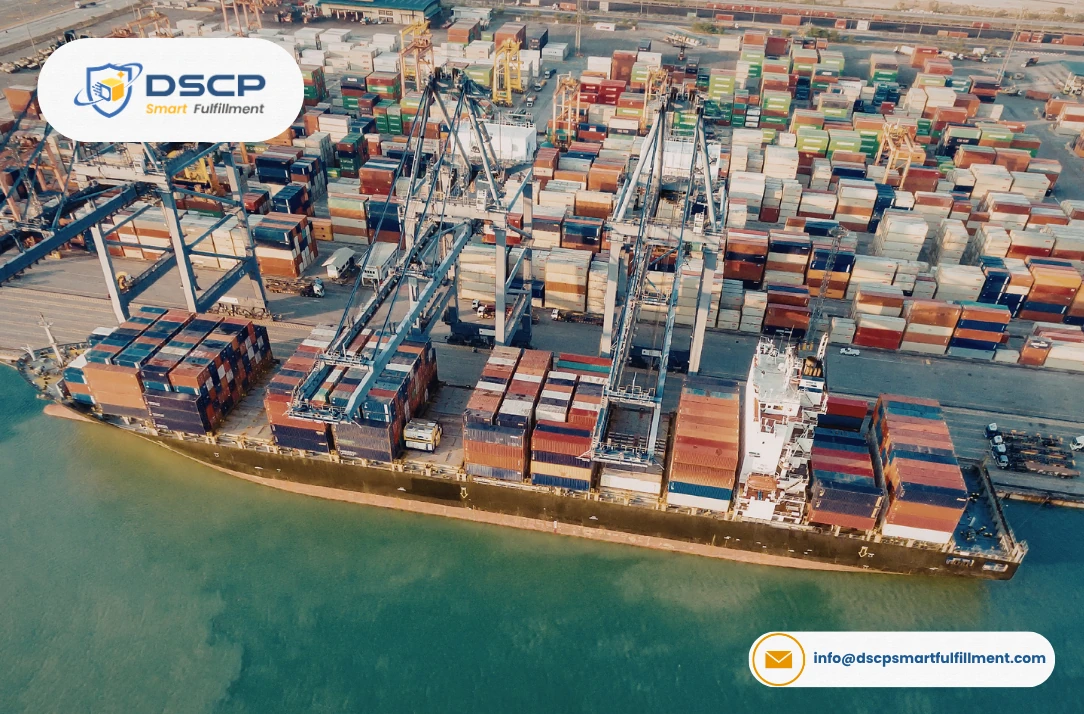
The last step is the one brands forget to ask about, and it is the only one that determines when you can sell. A pallet sitting on a dock is not inventory. It becomes inventory when it has been counted, checked against your purchase order, assigned locations and pushed live to your store.
Ask a prospective partner how long that takes, and what happens when the count does not match. A shipment that is twelve units short should surface on the dock on day one, not six weeks later when an order cannot be filled and nobody can tell whether the factory shorted you or the units went missing in transit. At DSCP Smart Fulfillment receiving completes within 24 to 48 hours of arrival, with quantities verified against your purchase orders and each SKU given its own barcoded location.
Plan Backwards From the Day You Want to Sell
Work from the on-sale date rather than the order date and the timeline stops surprising you. A standard ocean shipment needs the purchase order placed well over two months ahead once you count production, transit, clearance, the port run and receiving.
Whether a product deserves that commitment at all is a separate question, and one we put numbers on in our comparison of US and China fulfillment on cost, speed and capital.
How DSCP Smart Fulfillment Handles the Route
We run this lane ourselves rather than handing you to a forwarder and picking things up at the dock. Cargo moves from Shanghai, Ningbo or Shenzhen into the Port of New York and New Jersey, roughly 15 days on a fast ocean service, about 35 on a standard one, with air freight at 6 to 8 days when a launch date will not move. When we ship the container we handle the customs clearance, provided you supply the certifications your product requires. We arrange the truck from the port ourselves, so the delivery appointment and the receiving window are booked by the same people, and a container is never sitting at a terminal because two vendors were waiting on each other.
It lands at our New Brunswick warehouse, where receiving completes in 24 to 48 hours with quantities checked against your purchase orders on the dock. From there orders released by 5 PM EST ship the same day at 99.9% pick and pack accuracy, reaching the northeast corridor in about a day and roughly 80% of the US population in two to four. Kitting and assembly run in the same building, so components arriving from several suppliers can be held and built into finished sets rather than shipped out to another vendor first. For brands that want to test a product before committing a container, our hybrid fulfillment model lets you ship direct from China while demand is unproven, then move the winners into US stock.
Get Your First Container Planned Properly
Tell us your supplier city, your product and the date you want to be selling, and we will work the timeline backwards and tell you when the purchase order needs to go in. Get in touch to map the route before you commit to it.
Conclusion
Shipping from China to an East Coast warehouse is not difficult so much as unforgiving of vagueness. The filing deadline falls before the ship leaves. The duty is not in the freight quote. The container still needs a truck and an appointment after it clears. And none of it counts as inventory until somebody has counted it. Get those four fixed in the plan, count backwards from the day you want to sell rather than forwards from the day you order, and the route behaves itself.

What to Do When Your Shipment Gets Stuck in Customs
Learn why shipments get held in customs, the steps to get them released fast and how to prevent costly delays from disrupting your e-commerce business.

What Is a Shipping Manifest? A Guide for Online Sellers
Learn what a shipping manifest is, what it includes and why accurate documentation is essential for smooth customs clearance and on-time delivery.