MoCRA Requirements: Do You Need FDA Approval for Cosmetics?
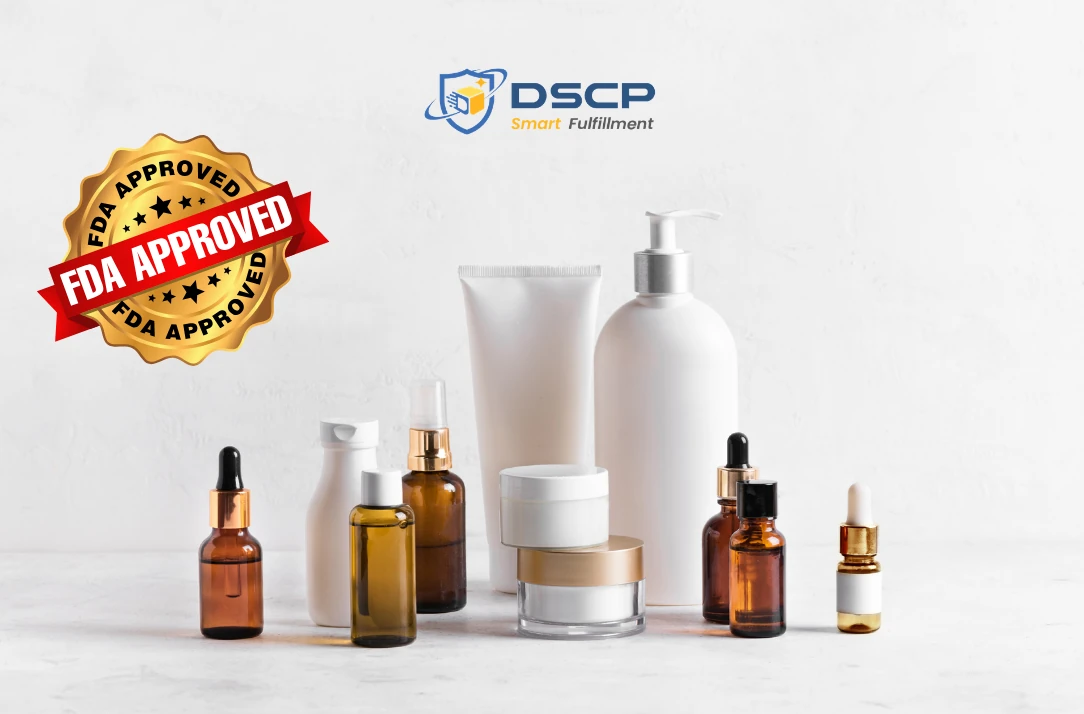
A skincare founder in Antwerp has American customers asking for her products and a range that already meets EU rules. What stops her moving stock to a US warehouse is one belief: that the FDA must inspect her factory and issue a certificate first. It does not. On September 9, 2026, the agency stated that it does not issue certificates or any other documents to verify cosmetic facility registration or product listing (US Food and Drug Administration, 2026).
What the US does have is the Modernization of Cosmetics Regulation Act, known as MoCRA. It is a set of online filings and record-keeping duties, and the system is already busy: 16,398 cosmetic facilities held active registrations and 1,298,361 products were listed as of June 30, 2026 (US Food and Drug Administration, 2026). This guide explains each MoCRA requirement from the point of view of a brand based outside the US, so you know what to file before you plan cosmetics fulfillment in the country.
Key Takeaways for MoCRA Requirements
- FDA does not pre-approve cosmetics or issue compliance certificates. Color additives are the main exception.
- MoCRA requirements are filings and records: facility registration, product listing, safety substantiation, adverse event reporting and label contact details.
- Registration belongs to the facility that makes the product, and a foreign facility must name a US agent. Product listing belongs to the brand whose name is on the label.
- The small business exemption is based on average US sales under $1 million over three years, not global sales, and it does not cover eye-area, injected, internal-use or long-wear products.
- A US warehouse that only stores and ships finished products is not a “facility” under FDA guidance, so holding stock in the US does not add a registration.
What Is MoCRA?
MoCRA is the Modernization of Cosmetics Regulation Act of 2022, which FDA calls the most significant expansion of its authority over cosmetics since 1938. Signed on December 29, 2022, it requires the companies that make and sell cosmetics in the US to register manufacturing facilities with FDA, list each product and its ingredients, keep records proving each product is safe, report serious adverse events within 15 business days and print a US-reachable contact on every label. It does not create a premarket approval or a certificate; compliance is shown by the filings and records themselves (US Food and Drug Administration, 2026).
Do You Need FDA Approval to Sell Cosmetics in the US?
No. Under US law, cosmetic products and ingredients do not need FDA approval before they go on the market, and FDA does not license cosmetics firms (US Food and Drug Administration, 2025). Two things change that answer for a foreign brand.
Color additives must be FDA-approved
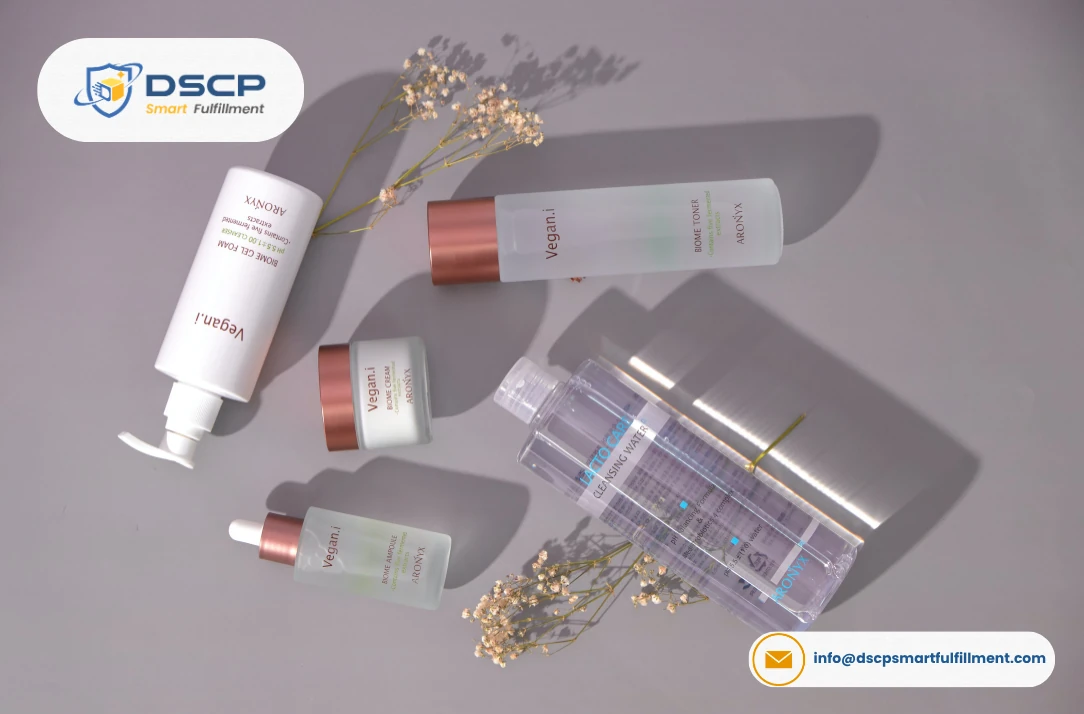
Every color additive in a cosmetic must be approved by FDA for that use, and some must also be batch certified by FDA. A colorant permitted in Europe is not automatically permitted in the US, and FDA notes that color additive violations are a common reason imported cosmetics are detained at the border (US Food and Drug Administration, 2022). Check every colorant on your ingredient list against FDA’s approved list before your first shipment.
A treatment claim turns a cosmetic into a drug
FDA decides whether a product is a cosmetic or a drug by its intended use, which it reads from your label, your advertising and even well-known ingredients (US Food and Drug Administration, 2024). A moisturizer that “hydrates dry skin” is a cosmetic. The same moisturizer with SPF, or a cleanser that “treats acne,” is a drug as well, and drugs follow a stricter route.
“Cleanses and refreshes”
“Reduces the look of fine lines”
“Adds shine to hair”
“Treats and prevents acne”
“Controls dandruff”
“Antiperspirant, stops sweat”
The Six MoCRA Requirements, Explained
Each requirement below cites the section of US law it comes from. Five apply now; the sixth, manufacturing standards, is still waiting for FDA to write the rule.
Facility registration
Every facility that manufactures or processes cosmetics for the US market must register with FDA and renew every two years. A new facility registers within 60 days of starting, and a foreign facility must include the name and phone number of its US agent (21 U.S.C. 364c, 2022). There is no fee to register or list (US Food and Drug Administration, 2024).
Product listing
The “responsible person” must list each cosmetic product with FDA, including its ingredients and the registration number of every facility that makes it, and update the listing every year. A product launched in the US must be listed within 120 days of going on sale. The responsible person is the manufacturer, packer or distributor whose name appears on the label, and FDA confirms that a company outside the US can fill that role.
Safety substantiation
The responsible person must keep records showing “adequate substantiation of safety,” meaning tests, studies or analyses that qualified experts consider enough to support a reasonable certainty the product is safe (21 U.S.C. 364d, 2022). The law does not require any specific test, and it does not require animal testing.

Serious adverse event reporting
If a customer reports a serious reaction, such as an infection, significant disfigurement or a hospital visit, the responsible person must report it to FDA within 15 business days with a copy of the label. Records of every adverse event report must be kept for six years, or three years for qualifying small businesses (21 U.S.C. 364a, 2022).
Label contact information
Since December 29, 2024, every cosmetic label must carry a domestic address, a domestic phone number or electronic contact information through which you can receive adverse event reports (21 U.S.C. 364e, 2022). Electronic contact information, such as a website or email address, is one of the three accepted options, which helps brands that have no US office yet. Products for professional use only also need a clear statement that they must be used only by licensed professionals.
Good manufacturing practice (pending)
MoCRA tells FDA to set manufacturing standards for cosmetics facilities. The law set December 29, 2024 for a proposed rule, but FDA’s MoCRA page lists no proposed rule as of its August 10, 2026 update (US Food and Drug Administration, 2026). Until a rule is final, there is nothing to comply with, but a factory already working to ISO 22716 or EU good manufacturing practice is well placed.
Who Files What When You Sell From Abroad
Most MoCRA explainers are written for US manufacturers. For a brand that makes products in Europe or Australia and sells to US customers, the duties split across three parties, and only some of them are yours.
| Requirement | Who is responsible | What it means for a foreign brand |
|---|---|---|
| Facility registration | Whoever owns or operates the manufacturing facility | Your contract manufacturer registers its own facility once. You may submit it on their behalf. |
| US agent | The foreign manufacturing facility | The facility, not the brand, names a US agent in its registration. |
| Product listing | The brand named on the label | You list each product, with the facility registration number, within 120 days of US launch. |
| Safety records | The brand named on the label | Keep the evidence on file. Nothing is submitted unless FDA asks. |
| Adverse event reports | The brand named on the label | Report serious events within 15 business days and keep records. |
| Label contact | The brand named on the label | Add a domestic address, domestic phone or electronic contact. |
| US fulfillment warehouse | Not a “facility” if it only holds and distributes | Storing and shipping finished products adds no registration. |
Two details in FDA’s guidance matter most here. First, a contract manufacturer making products for several brands needs only a single registration for its site. Second, an establishment that solely labels, relabels, packages, repackages, holds or distributes cosmetics falls outside the definition of a facility (US Food and Drug Administration, 2024). If you are unsure where a site fits, FDA’s free registration decision tool walks you through it.
The Small Business Exemption Counts US Sales Only
A responsible person or facility is treated as a small business when its average gross annual sales of cosmetic products in the United States over the previous three years are less than $1,000,000, adjusted for inflation (21 U.S.C. 364h, 2022). The law measures US sales, not worldwide sales. A brand that turns over several million euros at home but is just starting in the US can qualify.
Product listing
Future good manufacturing practice rules
Serious adverse event reporting
Label contact information
Approved color additives
The exclusion list catches more products than founders expect. Eye-area products such as mascara and eyeliner are typical examples, and long-wear products such as semi-permanent tints may run past the 24-hour line. If any product in your range falls in these groups, plan to register and list from day one.
Where MoCRA Stands in October 2026
Several MoCRA rules are still unwritten, and most guides online predate the latest changes. This is the position on FDA’s own pages as of our last check.
The certificate statement is worth reading closely. FDA says it does not issue a certificate, a verification letter or email, or a document confirming that a facility is not required to register (US Food and Drug Administration, 2026). If a service offers you an “FDA certificate” for your cosmetics, it is not an FDA document.
How Your EU Compliance File Helps
If you already sell in the EU, you have done much of the hard work. Regulation (EC) No 1223/2009 requires a safety assessment and cosmetic product safety report before a product goes on sale, plus a product information file for each product (European Union, 2009). MoCRA asks for neither document by name, but in our view the evidence inside them is the kind of tests, studies and expert analysis that US safety substantiation calls for.
Three gaps remain. Your EU colorants need checking against FDA’s approved list. Your EU claims need checking against the US cosmetic and drug line, especially SPF, and most labels need a few US cosmetic labeling changes. And your EU responsible person, who must be based in the EU, does not carry over: in the US the responsible person is simply whoever is named on the label, and that can be your own company.
How DSCP Smart Fulfillment Supports Brands Entering the US
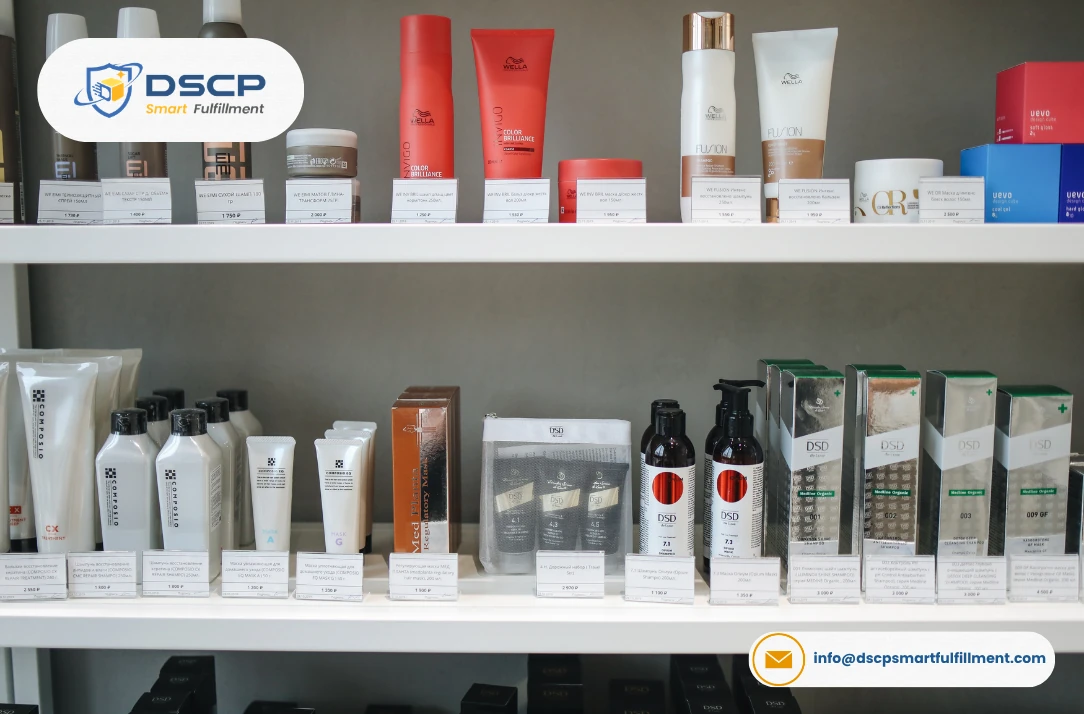
MoCRA filings sit with you and your manufacturer. What happens after the stock lands is where DSCP Smart Fulfillment comes in. Our beauty fulfillment service is built for brands moving inventory into the US for the first time:
- Two entry routes: European stock arrives through the Port of New York and New Jersey to our east coast fulfillment center, and Australian or Asian stock arrives through Los Angeles or Long Beach to our west coast 3PL warehouse.
- Fast receiving: stock is counted against your purchase order on the dock and live within 24 to 48 hours.
- US delivery: 2 to 4 day ground delivery to about 80% of the US population, with same-day dispatch on orders released by 5 PM EST.
- Import support: customs brokerage, importer of record setup and regulatory advice come through our partner network, and we tell you which is which before you commit.
- One contact: a dedicated account manager who answers quickly and knows your SKUs, across time zones.
If your products are held at the border, our guide to a shipment stuck in customs explains the next steps.
Plan Your US Launch With Fewer Unknowns
Tell us what you sell, where it is made and roughly how many US orders you expect. We will map out the import route, the warehouse and an itemized landed cost per order in writing, so you can decide with real numbers. Request your free landed-cost review.
Conclusion
You do not need FDA approval to sell cosmetics in the US, and no one can sell you an FDA certificate that means anything. MoCRA asks for a short list of filings and records: your manufacturer registers its facility and names a US agent, you list your products, keep safety evidence, report serious reactions and put a US-reachable contact on the label. If your US sales are still under $1 million a year, most of the paperwork may not apply yet, unless you sell eye-area or long-wear products.
Once the filings are in order, the remaining questions are logistical: where the stock lands, how fast it ships and what each order costs. That is the part a cosmetics 3PL with warehouses on both coasts can take off your hands.
How to Import Cosmetics Into the US as a Foreign Company
A step-by-step guide for foreign beauty brands: who can be importer of record, the bond and agent rules for nonresident companies and what clearance really costs.
Cosmetic Labeling Requirements: What EU Brands Must Change
A practical checklist for EU beauty brands on US cosmetic labels: what to change, what you can keep and the second-language rule most brands never see coming.