
How to Reduce E-Commerce Shipping Costs: 7 Proven Ways

Shipping is one of the largest operating expenses for any online business. For most e-commerce brands, it consumes between 15 and 30% of total revenue (Ecom Auto Prep, 2026). That percentage has been climbing steadily as carriers raise rates and fuel costs continue to surge in 2026.
Both UPS and FedEx implemented general rate increases of approximately 5.9% for 2026, with surcharges tied to fuel, delivery area, handling and package size adding even more on top (Digital Commerce 360, 2026). For sellers operating on thin margins, these increases are not just a line item. They are a direct threat to profitability.
The good news is that most e-commerce businesses are overpaying on shipping without realizing it. Oversized packaging, poor warehouse positioning, single-carrier dependency and a lack of rate negotiation are leaving real money on the table. This guide covers seven practical methods to reduce shipping costs without sacrificing delivery speed or customer experience.

Key Takeaways
- Right-sizing your packaging to eliminate wasted space can cut shipping costs by 20 to 50% per package through reduced dimensional weight charges.
- Positioning inventory in multiple US warehouse locations reduces shipping zones and lowers per-package delivery costs significantly.
- Using multiple carriers and comparing rates per shipment (rather than defaulting to one carrier for everything) typically saves 15 to 25%.
- Negotiating carrier contracts based on your actual shipping volume can unlock 10 to 40% in rate reductions.
- Small operational changes, like switching from boxes to poly mailers for non-fragile items, create compounding savings over thousands of shipments.
Why Shipping Costs Are Higher Than They Need to Be
Before diving into the solutions, it helps to understand why most sellers are overpaying.
Carriers like UPS, FedEx and USPS calculate shipping costs based on whichever is greater: the actual weight of a package or its dimensional weight. Dimensional weight (DIM weight) is a formula that charges you based on the space a package occupies rather than how much it weighs. The formula is simple: multiply the package’s length, width and height in inches, then divide by 139 for domestic shipments.
| Package Dimensions | DIM Weight (÷139) | If Actual Weight Is 5 lbs | You Pay For |
|---|---|---|---|
| 18 × 14 × 10 in | 18.1 lbs | 5 lbs | 18.1 lbs (DIM weight wins) |
| 14 × 10 × 8 in | 8.1 lbs | 5 lbs | 8.1 lbs (DIM weight wins) |
| 12 × 8 × 6 in | 4.1 lbs | 5 lbs | 5 lbs (actual weight wins) |
| 10 × 8 × 4 in | 2.3 lbs | 5 lbs | 5 lbs (actual weight wins) |
A large, lightweight package pays based on size, not weight. Research by Packsize found that the average e-commerce package contains approximately 40% wasted space (Packsize, 2026). That means four out of every ten packages you ship are larger than they need to be, and you are paying a premium for air.
This is the single biggest area of hidden cost in e-commerce shipping and the first place to start fixing.
7 Proven Ways to Reduce Your Shipping Costs
1. Right-Size Your Packaging to Eliminate Dimensional Weight Penalties
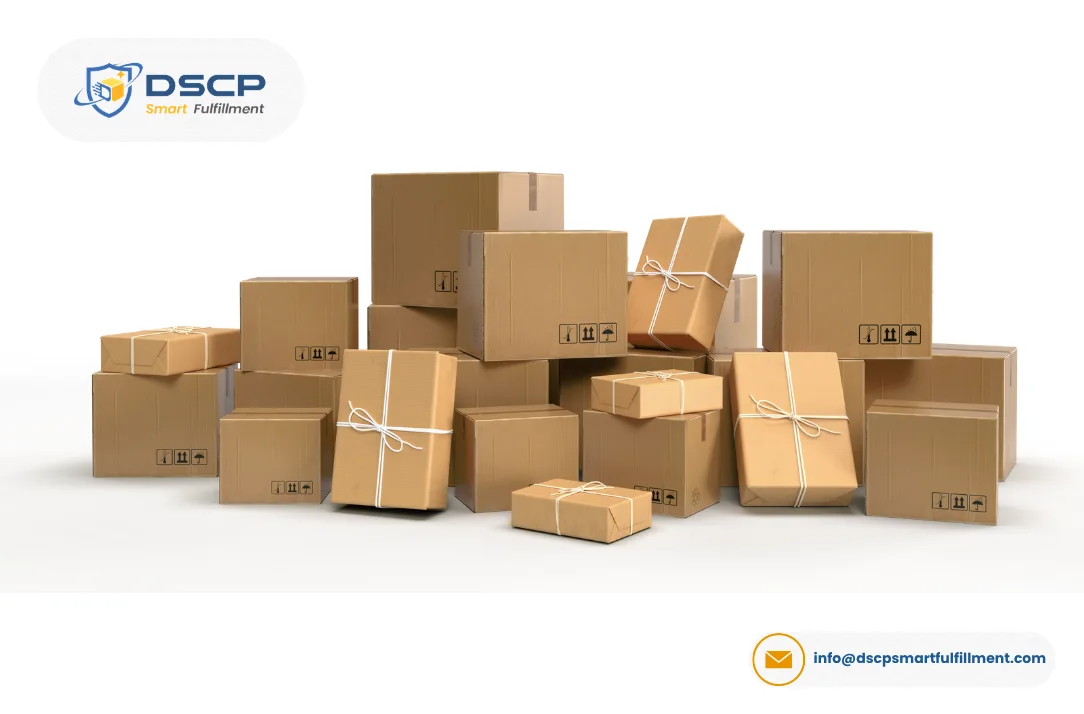
This is the fastest, most impactful change you can make. If your products ship in standard boxes that are larger than necessary, you are paying for empty space on every single order.
Here is what right-sizing looks like in practice. We recently helped a client whose products were arriving from the manufacturer in oversized packaging. The actual product weight was the same, but the volumetric weight of each package was 25 kilograms due to the bulky box dimensions. After repackaging the products at our warehouse to fit tightly, the volumetric weight dropped to under 10 kilograms. The result: each package shipped for at least 50% less than before.
The manufacturer had no reason to optimize packaging for shipping efficiency. Their priority was protecting the product during the factory-to-warehouse journey, not minimizing your carrier costs. This is a pattern we see regularly. Products arrive in packaging designed for bulk freight, not for last-mile delivery to customers.
Practical steps you can take today:
- Audit your top 20 SKUs and measure the gap between product size and package size
- Switch to custom-fit boxes or adjustable packaging that matches your product dimensions
- For non-fragile items like apparel, accessories or soft goods, replace boxes with poly mailers entirely
- Eliminate excess void fill (bubble wrap, air pillows, foam peanuts) wherever product protection allows
Even reducing package dimensions by a few inches on each side can drop you into a lower DIM weight bracket, saving dollars per shipment that compound into thousands over a quarter.
2. Position Inventory Closer to Your Customers
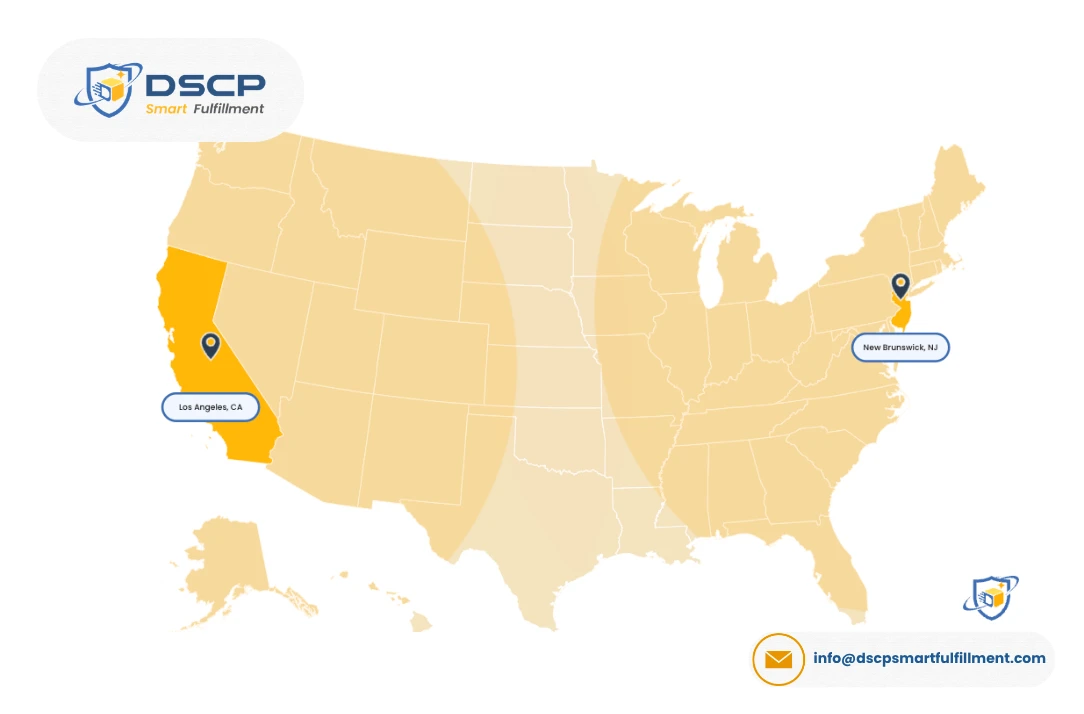
Carriers use shipping zones to calculate costs. Zone 1 is local delivery. Zone 8 is cross-country. The more zones a package crosses, the more it costs. A package shipped from New Jersey to a customer in New York (Zone 2) costs significantly less than the same package shipped from California to New York (Zone 7 or 8).
The solution is straightforward: store your inventory in locations that minimize the average number of zones your packages need to travel. For brands selling nationwide, having inventory in at least two locations, one on the East Coast and one on the West Coast, dramatically reduces your average shipping zone.
Industry data suggests that going from one warehouse to two can reduce shipping costs by approximately 10%, while three strategically placed locations can save around 30% (Parcel Industry, 2026). At DSCP Smart Fulfillment, we operate US warehouses in Pomona, California and New Brunswick, New Jersey, giving brands bi-coastal coverage that reaches the majority of US customers within two to three shipping zones.
3. Use Multiple Carriers Instead of Defaulting to One

Relying on a single carrier for all shipments is convenient but expensive. Different carriers have different strengths depending on package size, weight, destination and service level. USPS often has the best rates for lightweight packages under one pound. UPS and FedEx tend to be more competitive for heavier parcels and offer better tracking infrastructure. Regional carriers like OnTrac or LaserShip can beat national carrier pricing by 15 to 25% for deliveries within their coverage areas.
Modern shipping software can automatically compare rates across carriers for each shipment and select the cheapest option that still meets your delivery promise. This approach, called multi-carrier rate shopping, typically reduces total shipping spend by 15 to 25% compared to shipping everything through a single carrier (Ecom Auto Prep, 2026).
If you work with a 3PL provider, ask whether they offer multi-carrier selection as part of their fulfillment service. Many 3PLs have pre-negotiated volume rates across multiple carriers that individual sellers cannot access on their own.
4. Negotiate Carrier Rates Based on Your Volume

Carrier rate cards are not fixed prices. They are starting points for negotiation. If you ship more than 500 packages per month, you have enough volume to request a custom rate agreement. Companies shipping at that level should expect 20 to 40% reductions from published rates (Ecom Auto Prep, 2026).
Tips for effective negotiation:
- Contact multiple carriers at the same time. When they know you are comparison shopping, they become more flexible.
- Present your actual shipping data: average package weight, dimensions, volume by zone and monthly shipment count.
- Ask for specific surcharge reductions, not just base rate cuts. Fuel surcharges, residential delivery fees and DIM weight divisor adjustments often matter more than the base rate.
- Revisit your rates annually. Carrier agreements are not set-and-forget. Your volume may have grown enough to qualify for better tiers.
In a fulfillment-focused discussion on Reddit, one e-commerce seller shared that simply switching from the default carrier rate to a negotiated agreement saved them over 20% on monthly shipping costs, with the biggest savings coming from residential delivery surcharge reductions rather than base rate changes.
5. Offer Flat-Rate and Threshold-Based Shipping Strategically

Flat-rate shipping through USPS Priority Mail offers predictable pricing regardless of destination zone for packages that fit within standard flat-rate boxes. If your product fits in a flat-rate envelope or small box, this can be significantly cheaper than calculated rates, especially for cross-country shipments.
Threshold-based shipping (for example, offering complimentary shipping on orders above $75) encourages customers to add more items to their cart while protecting your margins on smaller orders. The key is setting the threshold above your average order value so it drives incremental revenue rather than simply absorbing shipping costs on orders that would have happened anyway.
6. Consolidate Shipments and Use Zone Skipping

If you ship high volumes to specific regions, zone skipping can deliver substantial savings. Instead of sending individual packages cross-country through a carrier’s full network, you consolidate multiple orders into a single truckload and ship them to a carrier’s regional hub closer to the final destinations. From there, packages enter the local delivery network and travel only one or two zones to reach customers.
The savings add up quickly. In one example, a company shipping 1,000 packages from Utah to Colorado at $15 each would spend $15,000. Using zone skipping with a bulk freight rate of $3,000 plus $9 per package for local delivery, the total drops to $12,000, a 20% reduction (Sifted, 2026).
Zone skipping requires enough volume to fill partial or full truckloads, which makes it most practical for brands shipping 1,000 or more packages per month to concentrated geographic areas.
7. Work With a Fulfillment Partner That Optimizes Shipping for You
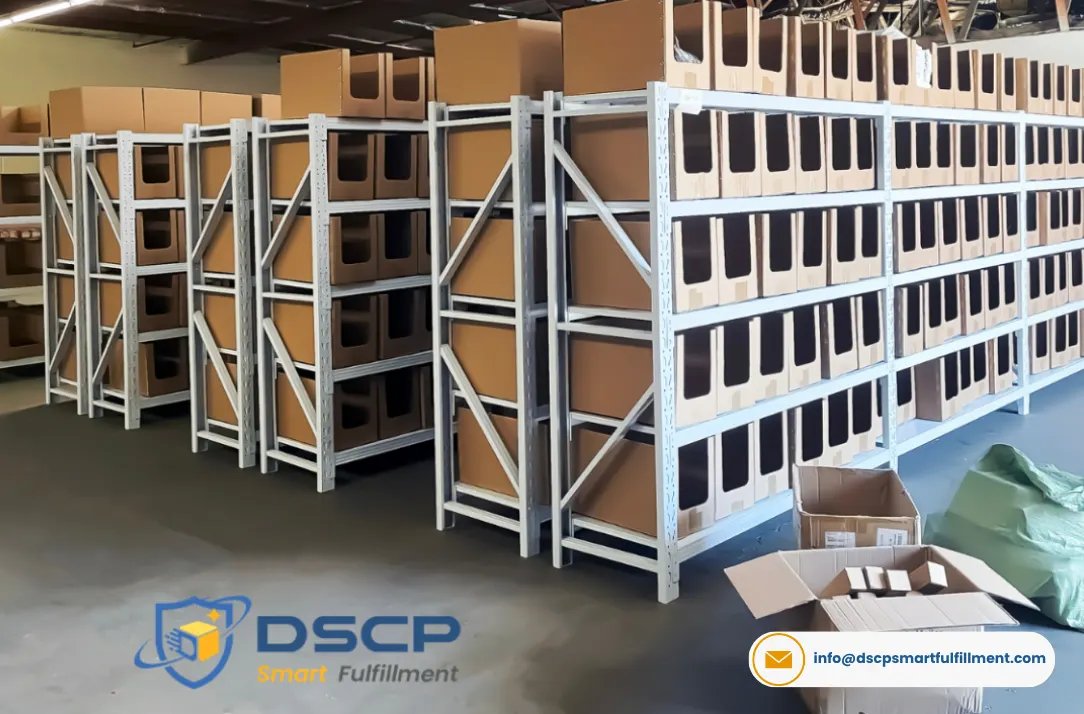
Many of the strategies above (multi-carrier rate shopping, warehouse positioning, packaging optimization and carrier negotiation) require infrastructure and expertise that most growing brands do not have in-house. This is where a 3PL partnership becomes a cost-reduction tool rather than just a convenience.
A qualified fulfillment partner brings pre-negotiated carrier rates, multiple warehouse locations, packaging expertise and the technology to select the optimal carrier for every shipment automatically. The combined effect of these advantages often exceeds what any single optimization can deliver on its own.
| Strategy | Estimated Savings | Best For |
|---|---|---|
| Right-size packaging | 20% – 50% per package | Any seller shipping products in oversized boxes |
| Multi-warehouse positioning | 10% – 30% overall | Brands shipping nationwide from a single location |
| Multi-carrier rate shopping | 15% – 25% overall | Sellers using one carrier for all shipments |
| Carrier rate negotiation | 20% – 40% off published rates | Brands shipping 500+ packages per month |
| Flat-rate and threshold shipping | Varies by order profile | Sellers with products that fit USPS flat-rate boxes |
| Zone skipping | 15% – 20% on qualifying lanes | High-volume sellers shipping 1,000+ packages monthly |
| 3PL fulfillment partnership | 10% – 40% combined | Growing brands ready to outsource fulfillment |
When evaluating fulfillment partners, ask specifically about their approach to packaging efficiency and dimensional weight optimization. The best providers will proactively repackage products to reduce DIM weight before shipping, not just use whatever box the product arrived in.
What Our Clients Say
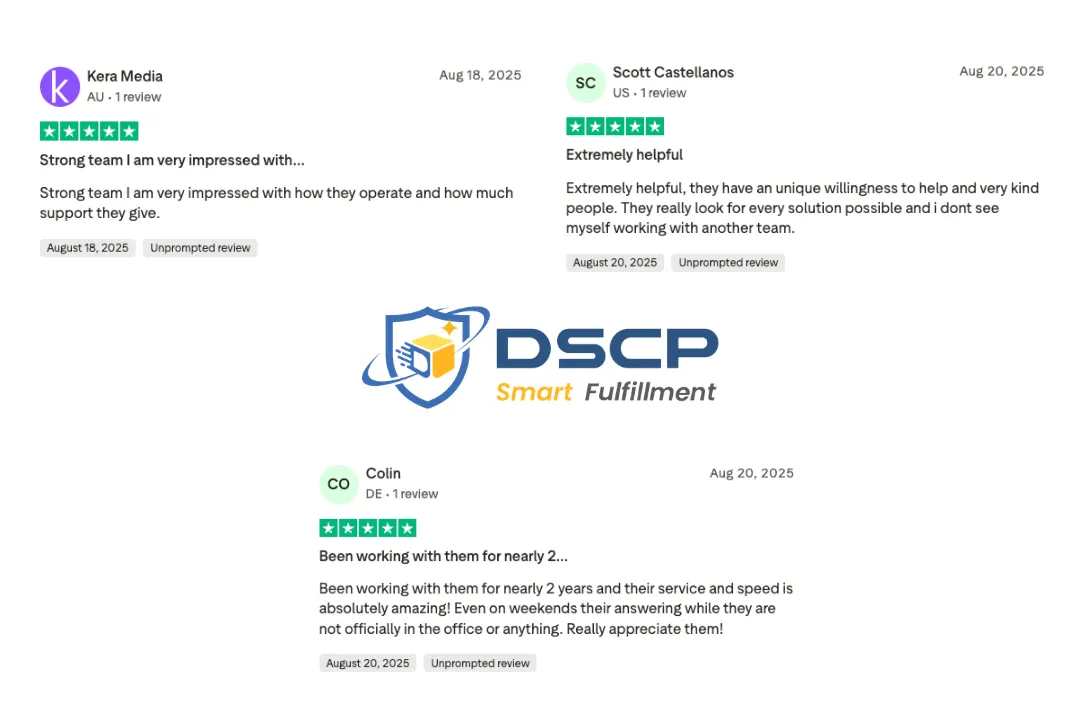
Our approach to reducing shipping costs is backed by results and relationships built over years of partnership.
“Been working with them for nearly 2 years and their service and speed are absolutely amazing! Even on weekends, while they are not officially in the office or anything. Really appreciate them!” – Colin, Trustpilot (5 stars)
“Extremely helpful, they have a unique willingness to help and are very kind people. They really look for every solution possible and I don’t see myself working with another team.” – Scott Castellanos, Trustpilot (5 stars)
“Strong team. I am very impressed with how they operate and how much support they give.” – Kera Media, Trustpilot (5 stars)
Ready to Lower Your Shipping Costs?
If shipping expenses are eating into your margins, DSCP Smart Fulfillment can help. We optimize packaging, position inventory across bi-coastal US warehouses and leverage multi-carrier rate shopping to reduce your per-package costs. Get in touch to see how much you could save.
Conclusion
Reducing e-commerce shipping costs does not require a complete overhaul of your operations. It requires attention to the details that compound: the size of your boxes, the location of your inventory, the number of carriers you compare, the rates you negotiate and the partner you trust to handle it all.
Start with the highest-impact change first. For most brands, that means auditing your packaging. If you are shipping boxes with 40% empty space, you are paying 40% more than you need to on every order. Fix that, and the savings fund every other optimization on this list.
The brands that grow profitably in 2026 will not be the ones with the highest revenue. They will be the ones that kept more of every dollar by controlling the costs that others overlook.

Best AI Tools for E-Commerce Sellers in 2026
Eight AI tools that deliver measurable results for e-commerce sellers in 2026, covering customer support, marketing, content, pricing and forecasting.
Amazon Prime Day 2026: E-Commerce Seller Prep Guide
Amazon Prime Day 2026 runs June 23 to 26. Plan inventory, fulfillment and campaigns ahead of the earlier date with this complete seller guide.