
US vs China Fulfillment: Cost, Speed and Capital Compared
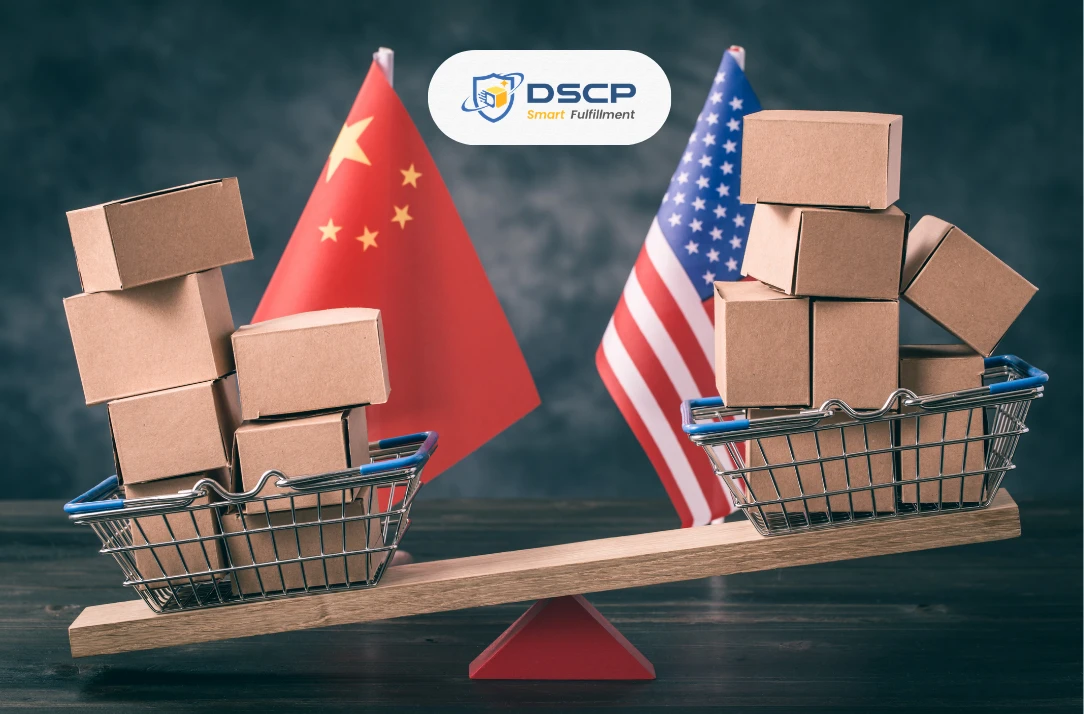
Ask ten online sellers whether it costs less to ship a lipstick from a warehouse in China or one in New Jersey, and most will say China. It is the assumption the whole industry runs on, and it is why a lot of brands keep shipping direct long after they should have stopped.
So we checked it against our own orders. For a 0.1 kg cosmetics item, shipping and fulfillment from a US warehouse came to about $5.02. The same item shipped direct from China came to about $6.35, and took 7 to 12 days to arrive instead of two to four. That gap is not academic: 63% of shoppers say they will choose a different retailer next time if delivery takes longer than two days (Capital One Shopping, 2026).
Key Takeaways for US vs China Fulfillment
- For a light order under 0.2 kg, US fulfillment cost roughly $0.70 to $3.00 less per order than shipping direct from China, and arrived in two to four days instead of 7 to 12.
- The gap widens as the parcel gets heavier. On a 0.2 kg cosmetics order it reached about $2.97.
- Holding stock on both US coasts beat a single West Coast location by about $0.45 to $0.67 per order, because parcels cross fewer shipping zones.
- In Q4, direct-from-China shipping rises 30% to 50%, while US domestic peak surcharges run to only around $0.50 to $0.75 per package, so the gap is widest exactly when volume peaks.
- Error and return rates were near zero and effectively equal on both routes, so reliability does not decide this.
- Shipping direct from China has one real advantage: little or no US inventory capital. Stocking a proven catalog in the US can tie up tens of thousands of dollars, against zero to around $10,000 for a few days of stock held in China, which is why it is the right way to test and the wrong way to scale.
What We Compared, and How
There are two ways to get a product into a US customer’s hands. Hold no US inventory and ship each order direct from China, which is simple to start and slow to arrive. Or stock the product in a US warehouse and fulfill domestically, which is fast and, for light items, cheaper per order, but means committing cash to inventory.
We anchored the comparison to one representative order rather than a blended average, because a real cost depends on weight and size, and an average hides exactly the thing you need to see. The example is a light cosmetics or jewelry item in the 0 to 0.2 kg range, the most common weight band across our orders and the bulk of everyday e-commerce. Figures cover shipping plus fulfillment handling. They exclude import duties, which are separate and depend on the product, so read them as fulfillment cost rather than total landed cost. Delivery times, error rates and return rates come from our own fulfillment records.
Cost per Order: the US Wins on Light Items
Here is the part that surprises sellers. Once shipping and fulfillment handling are both counted, a light parcel leaving a US warehouse costs less than the same parcel leaving China, and the gap grows with every extra gram.
Across the four cases the US route came out roughly $0.70 to $3.00 cheaper per order. The pattern matters more than any single figure: the heavier the parcel, the wider the US advantage gets. Doubling the weight from 0.1 kg to 0.2 kg more than doubled the saving on cosmetics, from $1.33 to $2.97, so heavier products should save considerably more again. For the light, high-frequency orders that make up most of e-commerce, a product already sitting in the US is cheaper to ship, not more expensive. Distance is what a parcel carrier charges for, and holding stock in the country removes most of it.
There is a quieter finding in the same data. Holding inventory on both coasts rather than only the West Coast lowered the average parcel cost by about $0.45 to $0.67 per order, because more orders ship a short distance instead of crossing the country. On a thousand orders a month, that is real money for a decision that costs nothing to make.
The Q4 Spike Nobody Prices In
The gap is not fixed. When global shipping demand peaks in the fourth quarter, direct-from-China rates climb 30% to 50%. US domestic carriers add peak surcharges too, but on a completely different scale: UPS applies a demand surcharge of $0.50 per package on ground residential from late October, rising to $0.75 through the Christmas period (UPS, 2026). One is a percentage of your freight bill, the other is small change per parcel. The season your margin matters most is the season the China route gets most expensive.
Delivery Time: Two to Four Days Against Seven to Twelve
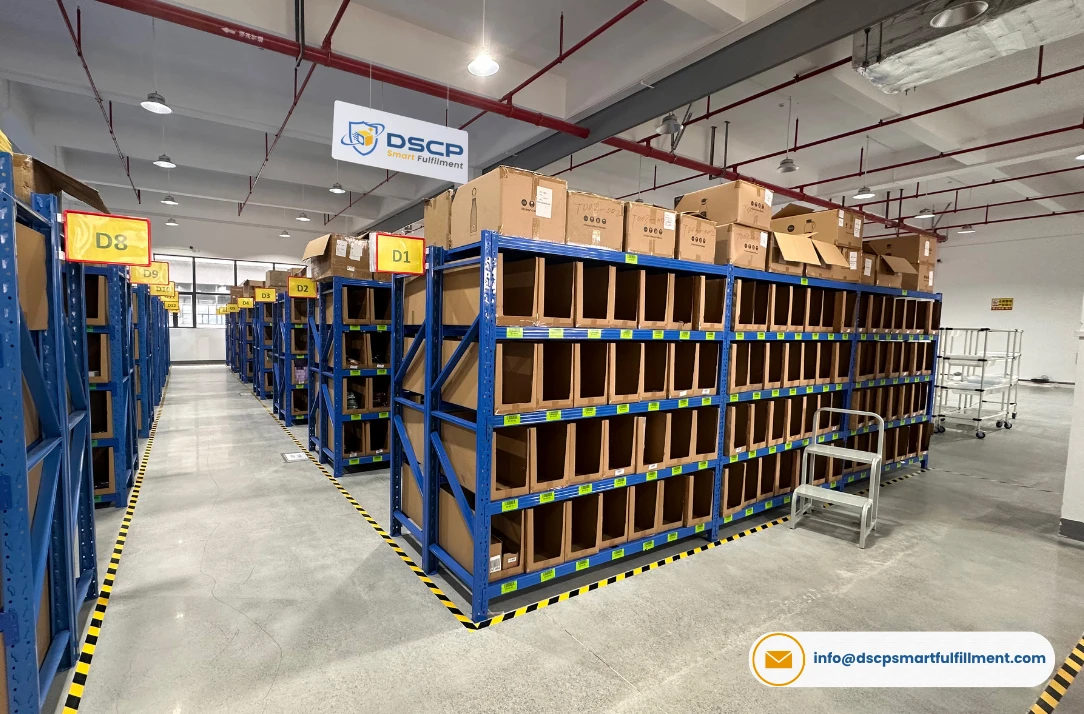
Speed is the widest gap of all, and the easiest for a customer to notice. A product stocked in our US warehouses reaches roughly 80% of the US population in two to four days by ground. The same order shipped direct from China takes 7 to 12 days.
For a product that is already selling steadily, a wait of up to twelve days is a quiet tax on repeat business. The first order still arrives. The second one often goes to whoever delivered faster.
Accuracy and Returns: a Wash
One worry turned out not to matter. In our records, order accuracy is near perfect and return rates are effectively identical whether an order ships direct from China or from a US warehouse. Neither route carries a reliability penalty. That is genuinely useful, because it clears an argument off the table and leaves the decision to the three things that do differ: cost, speed and the cash you tie up.
Capital: the Real Case for Shipping From China
If the US route is faster and cheaper per order, why would anyone ship direct from China? This is the answer, and it is the most important number in the study. Stocking inventory in the US means paying for that inventory up front and holding it until it sells. For a brand with a proven catalog, the cash locked in US stock at any moment runs into the tens of thousands of dollars, often around $50,000 for a mid-sized catalog.
Shipping direct from China ties up far less, because you are mostly shipping what has already been bought. It is not always nothing: many brands keep a few days of stock at the China end to keep dispatch quick, which typically sits somewhere between zero and $10,000 rather than the tens of thousands a full US catalog requires.
There is a second commitment people forget: time. Stocking a US warehouse means getting the goods there first. Sea freight from Shanghai, Ningbo or Shenzhen into the Port of New York and New Jersey runs about 15 days on a fast service and about 35 days on a standard one, with air freight at roughly 6 to 8 days when speed matters more than cost. So the decision to stock is made weeks before the first order ships, which is precisely why you want the product proven before you make it.
Stored inventory also carries a running cost that climbs the longer it sits. Storage is charged by volume and time, and the rate steps up the longer stock stays put.
That rising scale is a built-in warning against over-committing to a product before you know it sells. Capital and storage are the price of speed, and they are only worth paying once a product has earned it.
What the Numbers Mean: Test in China, Scale in the US
Put the four findings together and the two routes stop looking like rivals. They are two stages of one strategy. While a product is unproven, ship it direct from China. You tie up no capital, carry no inventory risk, and the slower, slightly pricier delivery is a fair trade for finding out whether anyone wants it. Once it proves itself, move it into US stock, where it ships faster and cheaper per order, protects repeat customers and sidesteps the Q4 spike. Reliability is the same either way, so the only real questions are whether a product has earned the capital, and how fast your customers expect it.
| Stage | Best Route | Why | What It Costs You |
|---|---|---|---|
| Testing a new product | Direct from China | No inventory commitment while demand is unproven | 7 to 12 days to the door, and a higher per-order cost |
| Scaling a proven product | US warehouse | Cheaper per order, two to four day delivery, only a small peak surcharge | Capital up front, plus 15 to 35 days to get stock in place |
How DSCP Smart Fulfillment Uses Both
These benchmarks come from DSCP Smart Fulfillment’s own operation, and they are the reason we run a hybrid model rather than pushing every brand down one path. You can test a new product shipping direct from China, tying up nothing while you find out whether it sells, then move the winners into US stock across our warehouses in Pomona, California and New Brunswick, New Jersey, where our east coast fulfillment services ship orders placed by 5 PM EST the same day at 99.9% pick and pack accuracy. We arrange the inbound freight and the run from the port, so moving from testing to stocking is a scheduling conversation rather than a project.

Pricing is competitive and fully transparent, which means the per-order numbers above are the kind you can plan around instead of discovering on an invoice. If you want to know when a product is ready to make that move, our guide on when to stock a product in a US warehouse walks through the signals, and our hybrid fulfillment model puts both routes under one roof.
See Where Your Products Fit
Want to know what your own orders would cost and how fast they would land on each route? Send us your SKU list with weights and we will run the same comparison on your products. Get in touch for numbers built around your real orders.
Conclusion
The assumption that China is always cheaper survives because almost nobody checks it at the order level. For the light parcels that make up most of e-commerce, it is wrong on cost and badly wrong on speed. What shipping direct from China genuinely buys you is permission to be uncertain, and that is worth a great deal right up until the moment a product starts selling. After that, every extra day of transit and every extra dollar per order is money spent defending an assumption instead of a business.
3PL Philadelphia: What to Check Before You Sign
Most Philadelphia 3PLs sit within 60 miles of the city and deliver in the same one to two days. Here is what actually differs, and the four questions to ask.

New York 3PL Warehouse: Serving NYC From New Jersey
The Port of New York and New Jersey moved 8.9 million containers in 2025, and almost none stopped in the city. Here is why New York fulfillment happens in New Jersey.