Best 3PL for Shopify: 7 Fulfillment Partners Compared

Choosing a 3PL for Shopify is one of the highest-leverage operational decisions a store owner makes. Get it right, and your customers receive fast, accurate shipments that build loyalty and repeat purchases. Get it wrong, and you spend your days managing chargebacks, returns, late-shipment complaints and one-star reviews that quietly erode your growth.
The challenge is that not every 3PL is actually built for Shopify. The Shopify App Store lists thousands of fulfillment apps, and many are not true 3PLs at all. Some are software connectors, others are freight brokers, and plenty are general logistics companies that treat Shopify as one of a dozen channels rather than a specialty. For a Shopify-first brand, that difference matters enormously.
This guide compares seven of the most recognized fulfillment options for Shopify stores in 2026, evaluated against the criteria that actually matter: native integration quality, pricing transparency, warehouse coverage, delivery speed, order minimums and support. Each provider is assessed honestly for the type of store it serves best.
Key Takeaways for the Best 3PL for Shopify
- A true Shopify 3PL offers native integration, not just a third-party connector, so orders, inventory and tracking sync automatically in real time.
- The best fulfillment partner for your store depends on your order volume, product type, customer locations and whether you value specialization over raw scale.
- Native integration, transparent pricing, fast bi-coastal delivery and responsive support are the criteria that matter most for growing Shopify brands.
- Specialized Shopify-focused providers often serve store owners better than massive multi-channel 3PLs that treat Shopify as one channel among many.
- Always test the integration with a small batch before committing, confirming that inventory syncs, tracking flows to customers and returns feed back correctly.
What Makes a 3PL Right for Shopify
Before comparing providers, it helps to understand what genuinely separates a Shopify-ready fulfillment partner from a generic logistics company. The best Shopify 3PLs share a specific set of traits:
- Native Shopify integration, meaning a direct app connection rather than a third-party middleware bridge. This is the difference between orders flowing automatically and orders requiring manual workarounds.
- Real-time inventory sync so your Shopify store always reflects actual stock levels and you avoid overselling products you cannot ship.
- Automatic order routing, where orders are pushed to the fulfillment center the moment a customer checks out, with no manual export or import.
- Tracking updates are pushed back to Shopify, so customers receive notifications automatically and your support inbox stays quiet.
- Branded packaging options, so your Shopify brand identity extends to the unboxing experience rather than arriving in generic boxes.
- Returns management that cleanly feeds reverse logistics back into your Shopify inventory.
A provider missing any of these forces you to bridge the gap manually, which defeats the purpose of outsourcing fulfillment in the first place.
How We Evaluated These Providers
Each provider below is assessed against six criteria that determine whether a Shopify fulfillment partnership helps your store or holds it back:
| Criteria | What to Look For | Red Flag |
|---|---|---|
| Integration Quality | Native Shopify app with real-time order, inventory and tracking sync | Third-party connector or custom development required |
| Pricing | Competitive rates that are clear and fully explained upfront | Vague quotes, surprise surcharges, hidden storage fees |
| Warehouse Locations | Bi-coastal US coverage for 2 to 4 day ground delivery | Single location forcing long zones and high costs |
| Order Accuracy | Barcode verification and disciplined pick-and-pack process | No accuracy process; frequent mis-picks and mismatches |
| Scalability | Capacity and pricing that grow with your order volume | A provider you will outgrow within a year |
| Support Quality | A dedicated, easy-to-reach contact who knows your store | Shared ticket queue with slow response times |
The 7 Best 3PL Options for Shopify
1. DSCP Smart Fulfillment

Best for: Shopify-first brands that want a specialized partner with competitive, transparent pricing, dedicated support and fast bi-coastal US delivery.
DSCP Smart Fulfillment is built specifically for Shopify sellers. The Shopify app connects to your store directly, so orders flow automatically into fulfillment, inventory stays synced in real time and tracking pushes back to your customers without manual work. For custom-coded stores, a REST API provides the same direct connection.
This Shopify-first focus is deliberate. Rather than treating Shopify as one of many channels, DSCP Smart Fulfillment specializes in serving Shopify brands, which means the integration, workflows, and support are all built around how Shopify stores actually operate. Pricing is both highly competitive and fully transparent, with clear rates and no hidden fees. Clients consistently highlight two things in their reviews: pricing that beats what they paid elsewhere, and a support team that is genuinely easy to reach. Rather than a shared ticket queue, every client gets a dedicated account manager who knows their store and responds quickly.
With US warehouses in Pomona, California, and New Brunswick, New Jersey, the bi-coastal network delivers to most US addresses in 2 to 4 days via ground shipping. Beyond standard pick-and-pack fulfillment, the model covers product sourcing, quality control and end-to-end e-commerce fulfillment, so growing Shopify brands can manage their full supply chain through one partner.
Integration: Native Shopify app plus REST API for custom stores. Warehouses: Pomona, CA and New Brunswick, NJ. Pricing: Competitive and transparent, no hidden fees. Support: Dedicated account manager
2. ShipBob
Best for: Shopify-first DTC brands scaling fast that want a large warehouse network.
ShipBob is one of the most widely adopted 3PLs on Shopify, with a network of 50 or more fulfillment centers across the US and internationally. Its standout feature is distributed inventory: you can split stock across multiple centers so orders ship from the location closest to the customer, reducing transit times. ShipBob reports strong order accuracy and on-time shipping rates, and its Shopify app is well-rated.
The trade-off for smaller stores is cost. ShipBob carries a monthly minimum and uses custom pricing that requires a quote, which makes it a better fit for brands already shipping a few hundred or more orders per month than for stores just starting.
Integration: Native Shopify app Warehouses: 50+ globally Minimums: Monthly minimum applies Support: Account-based
3. ShipMonk

Best for: Shopify brands with subscription boxes, kitting needs or irregular seasonal volume.
ShipMonk positions itself as an accessible 3PL for growing brands, with no minimum monthly order requirements and flexible contract terms. Its Shopify integration includes real-time inventory syncing and automated order fulfillment, with particular strength in subscription box management and kitting, the complex assembly of different products per order that many general 3PLs struggle with.
ShipMonk operates multiple US fulfillment centers. Some merchants note that pricing can become less competitive as volume grows, so it is worth modeling your costs at scale.
Integration: Native Shopify app Warehouses: Multiple US locations Minimums: None Support: Account-based
4. Shopify Fulfillment Network
Best for: Shopify-native brands that want fulfillment managed inside the Shopify ecosystem.
Shopify Fulfillment Network (SFN) is Shopify’s own fulfillment offering, designed to integrate seamlessly within the Shopify platform. If your entire business runs on Shopify, having fulfillment connected directly to your store, inventory and analytics removes the friction of a separate system.
The network is still developing and does not match the warehouse density of the largest independent 3PLs. Pricing is quote-based, and custom packaging options are more limited than with specialized providers. For Shopify-first brands with straightforward needs, it is worth evaluating.
Integration: Native to Shopify Warehouses: Growing US network Minimums: Custom quotes Support: Shopify-managed
5. Red Stag Fulfillment

Best for: Shopify brands shipping heavy, oversized, fragile, or high-value products.
Red Stag specializes in the products most 3PLs avoid: items over a typical parcel weight, oversized goods, fragile items and high-value inventory. It backs its service with strong accuracy guarantees, including credits for any error, and offers a native Shopify integration. Its two warehouses reach a large share of US addresses within two days.
The specialization comes at a price premium, and the two-location footprint means less geographic distribution than larger networks. For standard lightweight Shopify products, a more general Shopify-focused partner is usually more cost-effective.
Integration: Native Shopify app Warehouses: Knoxville, TN, and Salt Lake City, UT Minimums: Best for established volume Support: Account-based
6. ShipHero
Best for: Operationally sophisticated brands that want warehouse management software alongside fulfillment.
ShipHero offers both outsourced fulfillment and a standalone warehouse management system, giving Shopify merchants the option to use ShipHero’s own network or power their own warehouse with its software. Its technology-first approach emphasizes barcode scanning and high pick accuracy built into every workflow.
The software depth is a strength for brands that want operational control, but it can introduce more complexity than a store owner who simply wants reliable, hands-off fulfillment is looking for.
Integration: Native Shopify app Warehouses: US network plus WMS option Minimums: Varies Support: Account-based
7. Amazon Multi-Channel Fulfillment (MCF)

Best for: Shopify brands already selling on Amazon that want to use Amazon’s network for off-Amazon orders.
Amazon MCF lets brands fulfill their Shopify orders from inventory stored in Amazon’s fulfillment centers. It offers broad warehouse coverage, fast delivery and standardized service levels, and it can be appealing for brands that already rely on Amazon for their marketplace sales.
The trade-offs are meaningful for a Shopify-first brand: orders can ship in Amazon-associated packaging unless configured otherwise, MCF fees have been rising, and you are tying your direct-to-consumer fulfillment to a platform that is also a competitor. It works best as a supplementary option rather than a primary Shopify fulfillment solution.
Integration: Via connector apps Warehouses: Amazon’s US network Minimums: None (per-unit fees) Support: Amazon-managed
| Provider | Best For | Integration | Warehouses |
|---|---|---|---|
| DSCP Smart Fulfillment | Shopify-first brands wanting competitive, transparent pricing and dedicated support | Native Shopify app plus REST API | Pomona, CA and New Brunswick, NJ |
| ShipBob | Fast-scaling DTC brands needing a large network | Native Shopify app | 50+ globally |
| ShipMonk | Subscription boxes, kitting, seasonal volume | Native Shopify app | Multiple US |
| Shopify Fulfillment Network | Brands wanting fulfillment inside the Shopify ecosystem | Native to Shopify | Growing US network |
| Red Stag Fulfillment | Heavy, oversized, fragile or high-value products | Native Shopify app | Knoxville, TN and Salt Lake City, UT |
| ShipHero | Brands wanting warehouse software with fulfillment | Native Shopify app | US network plus WMS |
| Amazon MCF | Amazon sellers fulfilling Shopify orders from Amazon stock | Via connector apps | Amazon’s US network |
How to Choose the Right One for Your Store
The best 3PL for your Shopify store depends on your specific situation. Here is a practical way to narrow it down:
If you are a Shopify-first brand that wants a specialized partner with competitive, transparent pricing and dedicated support, DSCP Smart Fulfillment is built for exactly that, with fast bi-coastal delivery.
If you are scaling fast and need a large warehouse network for nationwide distribution, ShipBob’s footprint is a strong fit.
If you sell subscription boxes or need flexible kitting with no minimums, ShipMonk specializes in that.

If you want fulfillment managed entirely within the Shopify ecosystem, Shopify Fulfillment Network is worth evaluating.
If you ship heavy, oversized, or fragile products, Red Stag’s specialization and guarantees are hard to match.
If you want warehouse management software alongside fulfillment, ShipHero leads in technology.
And if you already sell on Amazon and want to use its network for Shopify orders, MCF is a supplementary option to consider.
For most growing Shopify brands, the decision comes down to specialization versus scale. A focused, Shopify-first partner often delivers a better day-to-day experience than a massive multi-channel operation where your store is one account among thousands.
When Should a Shopify Store Move to a 3PL?

You do not need a 3PL on day one. Most Shopify stores should consider outsourcing fulfillment when they hit a clear set of signals:
- You are consistently shipping 10 to 20 or more orders per day and packing them yourself is eating into the time you should spend growing the store
- You are running out of storage space at home or in a small unit
- You cannot offer the fast, competitive shipping speeds your customers expect
- Fulfillment errors are creeping up as volume rises
- Peak seasons overwhelm your capacity and delivery times slip
When two or more of these are true, a 3PL becomes the leverage that lets you scale without drowning in operations.
Test Before You Commit
Whichever provider you choose, never go all-in without testing first. Ship a small batch through the 3PL’s Shopify integration and confirm three things: inventory syncs correctly to your store, tracking numbers appear automatically in customer notifications, and returns flow back into your system cleanly. A short trial reveals integration problems before they affect a large volume of customers, and it tells you a great deal about the provider’s support responsiveness.
Request clear pricing from at least one or two providers before deciding. Send each one your average order size, monthly volume, product dimensions and storage needs, and compare the total monthly cost rather than just the per-order rate, since storage, receiving and handling fees shape the real number.
Built for Shopify Sellers

If you are running a Shopify store and looking for a fulfillment partner built around how Shopify brands actually operate, DSCP Smart Fulfillment is designed for exactly that. Direct Shopify app integration, transparent pricing, dedicated support and fast delivery from US warehouses in Pomona, California and New Brunswick, New Jersey. Get in touch to talk through your store’s fulfillment needs and see whether we are the right fit.
Conclusion
The best 3PL for your Shopify store is not automatically the largest or the cheapest. It is the one whose integration, pricing, delivery speed and support align with how your store operates and where you are headed. Start by confirming the integration is genuinely native, then weigh pricing transparency, warehouse locations, accuracy, scalability and support against your specific needs.
For many Shopify brands, a specialized Shopify-focused partner delivers a better experience than a massive multi-channel 3PL that treats Shopify as an afterthought. Whatever you choose, test the integration with a small batch first, compare total monthly costs honestly and pick the partner that makes fulfillment something you never have to think about. That is what lets you get back to growing your store.
How to Offer Two-Day Shipping on Shopify
Two-day shipping is a geography problem, not a carrier problem. The three ways Shopify brands offer it, what each costs, and how to fund it without losing margin.
US vs China Fulfillment: Cost, Speed and Capital Compared
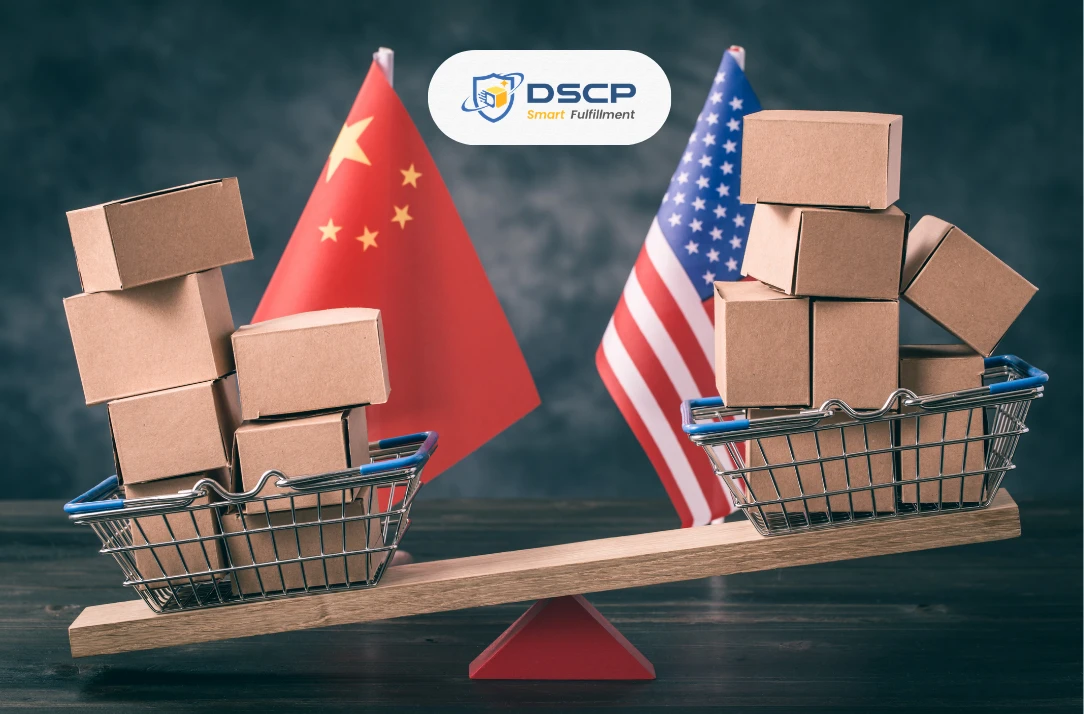
Most sellers assume China is cheaper. On our own orders it is not: for light items a US warehouse costs less per order and lands in 2 to 4 days instead of 7 to 12.