Best E-Commerce Fulfillment Companies in 2026
Choosing an e-commerce fulfillment company is one of the most consequential decisions a growing brand makes. The right partner ships your orders fast and accurately, keeps your customers happy and lets you focus on growth. The wrong one buries you in chargebacks, delays, surprise fees and one-star reviews. With customer expectations for fast delivery higher than ever and fulfillment costs climbing, the choice matters more in 2026 than it ever has.
The challenge is that no single company is best for every brand. A provider built for heavy, oversized freight is wrong for a lightweight apparel brand. A massive enterprise network can bury a small store in minimums and impersonal support. The best fulfillment company for you depends on your order volume, product type, sales channels and how much you value specialized service over raw scale.
This guide compares the leading e-commerce fulfillment companies in 2026, evaluated on the factors that actually affect your business: integration quality, pricing transparency, delivery speed, warehouse coverage, accuracy and support. Each entry is assessed honestly, including where it fits best and where it falls short, so that you can match the right partner to your brand.
Key Takeaways for the Best E-Commerce Fulfillment Companies
- The best e-commerce fulfillment company depends on your order volume, product type, sales channels and service expectations. There is no universal winner.
- DSCP Smart Fulfillment is the strongest fit for Shopify-first and growing brands that want competitive, transparent pricing, fast bi-coastal US delivery and responsive, dedicated support.
- Larger networks like ShipBob suit high-volume brands needing wide geographic distribution, while specialists like Red Stag serve heavy or high-value products.
- The factors that matter most are native integration, transparent pricing, delivery speed, order accuracy and the quality of support you actually receive.
- Always request current accuracy and on-time data, compare total monthly cost rather than per-order rates, and test with a small batch before committing.
How to Choose an E-Commerce Fulfillment Company
Before the comparison, here are the six criteria that separate a fulfillment partner that helps your business from one that holds it back:
- Integration quality: Does it connect natively to your store (Shopify and others) so orders, inventory and tracking sync automatically in real time?
- Pricing transparency: Are all fees clear and explained upfront, or buried in custom quotes and surprise surcharges?
- Delivery speed and warehouse locations: Can it reach most US customers in two to four days, ideally from multiple coasts to cut shipping zones?
- Order accuracy: Does it use barcode verification and maintain accuracy rates of 99% or higher to protect your reviews and margins?
- Scalability: Can it grow with you from a few hundred to several thousand orders a month without forcing a painful migration?
- Support quality: Do you get a dedicated contact who knows your brand, or a shared ticket queue?
Delivering within two to four days has become the competitive baseline, since 63% of consumers will switch retailers if shipping takes longer than two days (Capital One Shopping, 2026). Keep these six criteria in mind as you read the comparison below.
| Criteria | What to Look For | Red Flag |
|---|---|---|
| Integration | Native store connection with real-time sync | Manual order exports or middleware-only |
| Pricing | Competitive rates, clear and explained upfront | Vague quotes and surprise surcharges |
| Delivery Speed | 2 to 4 day reach, multi-coast warehouses | Single location and long shipping zones |
| Order Accuracy | 99% or higher, verified with recent data | Cannot or will not share accuracy rates |
| Scalability | Grows with you without a painful migration | A provider you outgrow within a year |
| Support | Dedicated contact who knows your brand | Shared ticket queue, slow peak response |
The Best E-Commerce Fulfillment Companies in 2026
1. DSCP Smart Fulfillment

Best for: Shopify-first and growing e-commerce brands that want competitive, transparent pricing, fast bi-coastal US delivery and responsive, dedicated support.
DSCP Smart Fulfillment is built for growing brands that want a specialized partner rather than a slot in an enterprise machine. It connects directly to your store, so orders flow into fulfillment automatically, inventory syncs in real time and tracking pushes back to customers without manual work. The Shopify fulfillment integration is native, with a REST API for custom-coded stores.
The operational specifics are where it stands out. Orders placed by 5 PM EST ship the same day, pick and pack runs at 99.9% accuracy, and because inventory is held in two US warehouses in Pomona, California, and New Brunswick, New Jersey, each order ships from whichever coast is closer to the customer, reaching most of the US in two to four days. Returns are handled in-house, inspected and restocked rather than left to the brand.
What clients consistently highlight sets DSCP apart from larger networks: pricing that is both competitive and fully transparent with no hidden fees, and a support team that is genuinely easy to reach, with a dedicated account manager who knows your store by name rather than a shared ticket queue. It covers end-to-end e-commerce fulfillment and 3PL warehousing, and supports a hybrid fulfillment approach for brands that also sell on Amazon.
Best for: Shopify-first and growing DTC brands. Warehouses: Pomona, CA, and New Brunswick, NJ. Integration: Native Shopify, plus REST API. Standout: Competitive, transparent pricing, 99.9% accuracy, dedicated support.
2. ShipBob
Best for: High-volume DTC brands needing a large, multi-location network.
ShipBob operates one of the largest independent fulfillment networks, with 60 or more fulfillment centers across the US and internationally, and integrates natively with a dozen e-commerce platforms. Brands distribute inventory across the network to cut shipping zones and transit times, and the merchant dashboard is among the strongest in the category. Its published minimum is around 250 orders per month, so smaller brands can qualify, though the custom pricing and scale can feel impersonal for a store that wants hands-on attention.

3. ShipMonk
Best for: Subscription boxes, kitting and startups.
ShipMonk is known for flexible terms and strength in subscription box management and complex kitting, the assembly of multiple products per order that many providers struggle with. It operates multiple US fulfillment centers and offers robotic automation in its facilities. Some merchants note that pricing can become less competitive as volume scales, so it is worth modeling costs at your expected growth stage.
4. Red Stag Fulfillment
Best for: Heavy, oversized, fragile, or high-value products.
Red Stag specializes in the products most fulfillment companies avoid: items over five pounds, oversized goods and high-value inventory. It backs its service with strong accuracy guarantees, including credits when it makes an error. The specialization is a genuine strength for the right products, but Red Stag itself notes it is not a fit for apparel-only brands, sub-five-pound high-volume DTC or international-primary operations, and pricing is custom-quote based.
5. ShipHero
Best for: Operationally sophisticated brands wanting warehouse software plus fulfillment.
ShipHero offers both outsourced fulfillment and a standalone warehouse management system, so brands can use its network or run their own warehouse on its software. Its technology-first approach emphasizes barcode scanning and high pick accuracy. The software depth suits brands that want operational control, but it can add more complexity than a store owner who simply wants reliable, hands-off fulfillment needs.

6. Amazon Multi-Channel Fulfillment (MCF)
Best for: Amazon-first brands fulfilling off-Amazon orders from Amazon inventory.
Amazon MCF lets brands fulfill orders from other channels using inventory stored in Amazon’s fulfillment centers, offering broad coverage and fast delivery. It appeals to brands already committed to Amazon. The trade-offs for a brand-building operation are real: orders can arrive in Amazon-associated packaging unless configured otherwise, MCF fees have been rising, and it ties your direct-to-consumer fulfillment to a platform that is also a competitor.
| Company | Best For | Warehouses | Standout Strength |
|---|---|---|---|
| DSCP Smart Fulfillment | Shopify-first and growing brands | 2 US: Pomona CA, New Brunswick NJ | Competitive transparent pricing, 99.9% accuracy, dedicated support |
| ShipBob | High-volume DTC needing wide reach | 60+ globally | Largest network and strong merchant dashboard |
| ShipMonk | Subscription boxes and kitting | Multiple US | Kitting depth and flexible terms |
| Red Stag Fulfillment | Heavy, oversized or high-value items | US locations | Accuracy guarantees with error credits |
| ShipHero | Brands wanting warehouse software | US network plus WMS | Technology and WMS control |
| Amazon MCF | Amazon-first brands | Amazon US network | Broad coverage from Amazon inventory |
How the Top Companies Compare
The right choice comes down to matching a provider’s strengths to your brand’s specific needs. Here is the quick version:
Choose DSCP Smart Fulfillment if you are a Shopify-first or growing brand that wants competitive, transparent pricing, fast bi-coastal delivery and a support team that actually knows your store. Choose ShipBob if you are high-volume and need the widest geographic network. Choose ShipMonk for subscription boxes and complex kitting. Choose Red Stag for heavy or fragile products. Choose ShipHero if you want warehouse software alongside fulfillment. And consider Amazon MCF only if Amazon is already your primary channel.
For most growing e-commerce brands, the decision comes down to specialization versus scale. A focused partner that treats your brand as a priority often delivers a better day-to-day experience than an enterprise network where your store is one account among thousands.
What to Verify Before You Sign
Whichever company you consider, protect yourself with a few concrete steps before committing:
- Request current performance data. Ask for accuracy and on-time shipping rates from within the last 90 days. Strong providers share this without hesitation.
- Compare total monthly cost, not per-order rates. Storage, receiving, pick-and-pack and returns fees all shape the real number. A low per-order rate can hide expensive storage.
- Ask who you will actually talk to. Know whether you get a dedicated contact or a call center when something goes wrong during peak season.
- Test with a small batch. Confirm the integration syncs inventory, pushes tracking to customers and feeds returns back cleanly before moving your full volume.
- Check peak-season capacity. A provider that overcommits heading into Q4 drops the ball on everyone. Ask for references from brands that have been through a peak season.
If you are still weighing whether to outsource at all, our guide on how to choose a 3PL provider walks through the full decision.
Work With a Fulfillment Partner Built for Growing Brands
If you want a fulfillment company that combines competitive, transparent pricing with fast US delivery and support that actually knows your business, DSCP Smart Fulfillment is built for exactly that. Orders ship the same day when placed by 5 PM EST, pick and pack runs at 99.9% accuracy and your inventory sits in California and New Jersey warehouses for fast two-to-four-day delivery nationwide. Get in touch to see how it would work for your brand.

Conclusion
The best e-commerce fulfillment company is not the biggest or the cheapest. It is the one whose strengths align with your products, your channels and your growth stage, and whose pricing and service fit how you actually operate. For heavy or fragile products, a specialist like Red Stag makes sense. For maximum geographic scale, a large network like ShipBob fits. And for Shopify-first and growing brands that want competitive, transparent pricing, fast bi-coastal delivery and support that treats them as a priority rather than an account number, DSCP Smart Fulfillment is built for exactly that.
Whatever you choose, verify current performance data, compare total costs honestly and test the integration before you commit. Switching fulfillment companies is expensive and disruptive, so it is worth getting the decision right the first time.
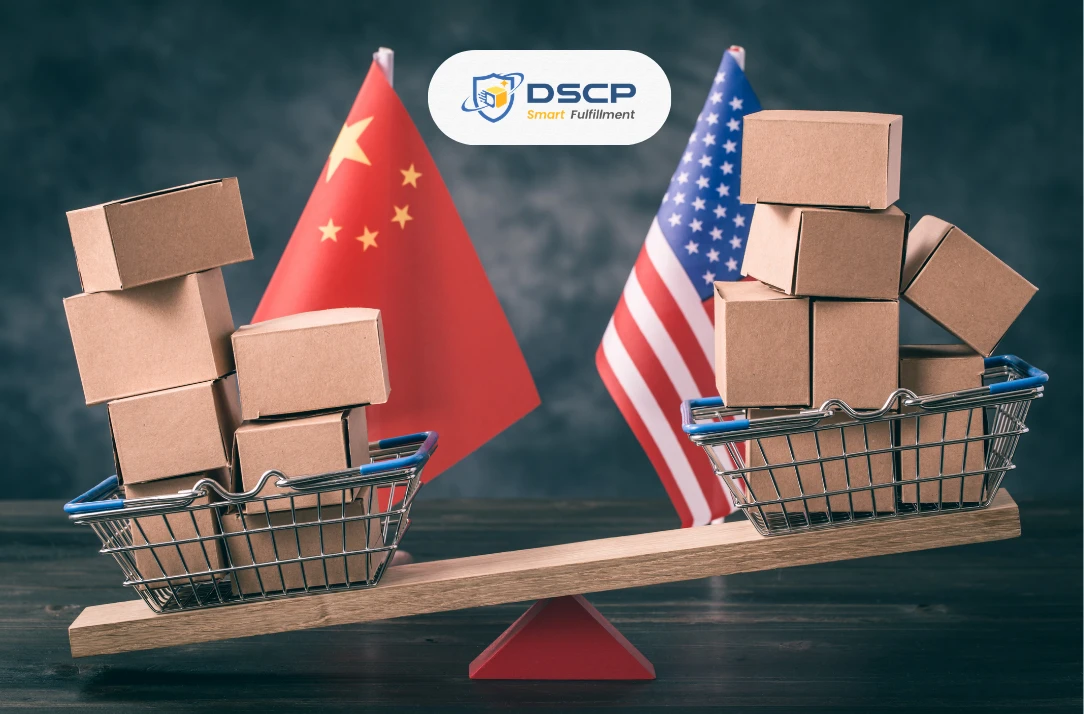
US vs China Fulfillment: Cost, Speed and Capital Compared
Most sellers assume China is cheaper. On our own orders it is not: for light items a US warehouse costs less per order and lands in 2 to 4 days instead of 7 to 12.
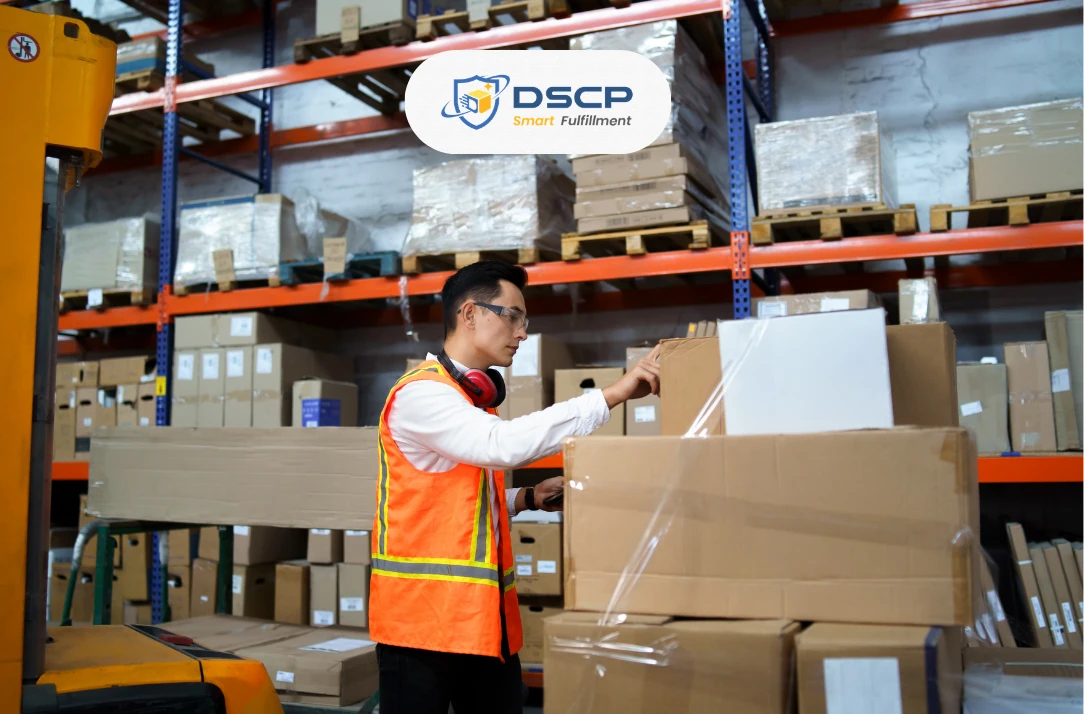
3PL Philadelphia: What to Check Before You Sign
Most Philadelphia 3PLs sit within 60 miles of the city and deliver in the same one to two days. Here is what actually differs, and the four questions to ask.