9 Shopify Apps Every New Store Should Install in 2026
You launched your Shopify store. The theme looks good, the products are live and the first orders are trickling in. Now comes the question every new store owner faces: which apps do you actually need to complete your setup, and which are just noise?
The Shopify App Store lists thousands of apps, and most new sellers either install too many (slowing their site and draining their budget) or too few (leaving money on the table). The truth is that a lean, intentional stack beats a crowded one every time. The most successful stores in 2026 are not the ones with the most apps. They are the ones with the right apps, each doing a specific job and working together cleanly.
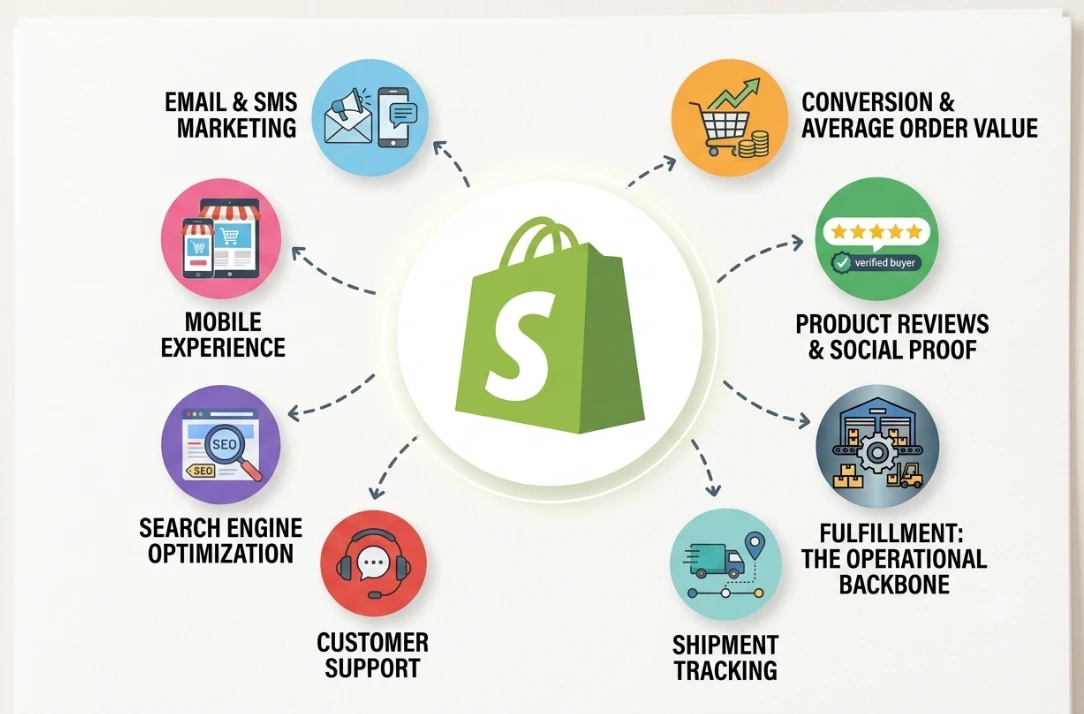
This guide cuts through the clutter. These are the nine apps that genuinely matter for a new or growing Shopify store, organized by the job each one does. Think of it as the checklist you open right after launch to complete your store’s foundation, covering email, reviews, conversion, SEO, support, shipping and the fulfillment backbone that ties it all together.
Key Takeaways for the Best Shopify Apps
- A lean, intentional app stack outperforms a crowded one. Install apps to solve real problems, not to fill a checklist.
- Every new Shopify store needs coverage across seven core jobs: email and SMS, reviews, conversion, SEO, support, shipping and fulfillment.
- The principle that matters most is one app per job. Overlapping apps create conflicts, slow your site and waste money.
- Start with the revenue foundation (email capture and reviews), then add apps as specific needs appear.
- Fulfillment is the operational backbone. As order volume grows, a reliable fulfillment partner keeps the rest of your stack worth having.
How to Choose Shopify Apps Without Overloading Your Store
Before the list, one principle worth internalizing: one app per job. The fastest way to slow your store and complicate your workflow is to install two apps that do the same thing. Two review apps, two upsell tools, or two SEO apps create duplication, conflicts and unnecessary cost.
| Job | App | Why It Matters |
|---|---|---|
| Email and SMS | Klaviyo | Owned-audience revenue through automated flows |
| Reviews | Judge.me | Social proof that builds trust and conversions |
| Conversion / AOV | Essential Upsell | Lifts average order value with cross-sells |
| Free shipping nudge | Free Shipping Bar | Encourages larger carts toward a threshold |
| SEO | Plug In SEO | Builds organic search traffic over time |
| Customer support | Tidio | Live chat and AI handle common questions |
| Shipment tracking | AfterShip | Branded tracking cuts “where is my order” tickets |
| Mobile pages | EComposer | Custom high-converting pages without code |
| Fulfillment | DSCP Smart Fulfillment | The operational backbone that ships every order |
When you evaluate any app, ask one question: does this directly support revenue, conversion, retention, support, or operational efficiency? If it does not clearly do one of those, you probably do not need it yet. Start with the foundation, add apps as specific problems appear and prune anything you are not actively using. A fast, focused store with seven well-chosen apps will outperform a bloated one with twenty every time.
With that principle in mind, here are the nine apps that cover the jobs every new store actually needs.
Email and SMS Marketing

1. Klaviyo
Email and SMS remain the highest-ROI marketing channels in e-commerce, and they are the first thing every new store should set up. The reason is simple: you do not own your social followers or your ad audiences, but you own your email list. It is the one marketing asset that cannot be taken away from you.
Klaviyo is the standard for Shopify email and SMS because it connects directly to your store data and lets you build automated flows that run without you. A welcome series greets new subscribers, an abandoned cart flow recovers lost sales and a post-purchase sequence turns first-time buyers into repeat customers. These automations run in the background and recover revenue you would otherwise lose. For a new store, setting up even the basic welcome and abandoned-cart flows is one of the highest-leverage moves you can make. Klaviyo offers a free tier to start, which is plenty for a store building its first list.
Product Reviews and Social Proof

2. Judge.me
New stores face a trust problem: shoppers do not know you yet. Product reviews solve this faster than almost anything else, because people trust other customers more than they trust your marketing. A product page with genuine reviews converts far better than one without.
Judge.me is the go-to review app for new Shopify stores because it does the core job well at an accessible price. It collects reviews automatically through post-purchase emails, displays them attractively on your product pages and supports photo and video reviews that add even more credibility. The free plan handles review collection and display with no time limit, which makes it ideal for a store just getting started. As social proof accumulates, it compounds: more reviews lead to more conversions, which lead to more reviews.
Conversion and Average Order Value
3. Essential Upsell & Cross Sell
Getting traffic to your store is expensive. Making each visitor worth more is free by comparison, which is why upsell and cross-sell tools earn their place in a new store’s stack. Showing a customer a complementary product or a frequently bought together bundle is one of the simplest ways to lift average order value without spending more on ads.
Essential Upsell & Cross Sell is a clean, beginner-friendly option that adds frequently bought together recommendations and cart upsells without complexity. It is well-rated, has a free plan to start and integrates smoothly, so it does not slow your store. For a new store, even a small lift in average order value flows straight to your bottom line, since the customer is already buying.
4. Free Shipping Bar
This one is small but punches above its weight. Roughly 88% of consumers are more likely to buy when free shipping is offered, and a progressive free shipping bar (for example, “You are $15 away from free shipping”) nudges customers to add one more item to their cart. It is one of the fastest, lowest-effort ways to increase average order value.
A free shipping bar app installs in minutes, requires almost no maintenance and works around the clock. For a new store, it is close to free money. The key is setting your free-shipping threshold slightly above your average order value so it actually encourages larger carts rather than just giving margin away.
Search Engine Optimization
5. Plug In SEO
Organic search traffic is the gift that keeps giving: unlike ads, it does not stop when you stop paying. But Shopify’s default SEO settings only take you so far, and most new store owners do not know what to optimize. An SEO app bridges that gap.
Plug In SEO audits your store and flags issues across page titles, meta descriptions, page speed, content structure and more. For a new store owner who is not an SEO expert, it acts as a guide, telling you exactly what to fix to improve your search visibility. SEO is a long game, so the sooner you start building good habits and fixing structural issues, the sooner organic traffic begins to compound. Pair the app with consistent content and product-page optimization for the best results.
Customer Support

6. Tidio
As orders grow, so do customer questions: where is my order, what is your return policy, is this in stock. Answering these manually eats up hours, and slow responses cost sales. A support app with chat and automation keeps your customers happy without consuming your entire day.
Tidio combines live chat with AI-powered automation that can answer common questions instantly, even when you are asleep. For a new store, the live chat alone helps convert hesitant shoppers who have a quick question before buying. As you grow, the automation handles the repetitive questions so you can focus on the ones that actually need you. It offers a free tier to start, making it accessible from day one.
Shipment Tracking
7. AfterShip
The post-purchase experience is where new stores often drop the ball. Once a customer buys, they want to know where their order is. If they cannot track it easily, they flood your inbox with “where is my order” messages, and their excitement curdles into anxiety.
AfterShip gives customers a branded tracking experience and automatic shipment notifications, so they always know the status of their order. This single app dramatically reduces support tickets while improving the customer experience, which drives repeat purchases. A polished post-purchase experience is what separates a store that customers buy from once from a store they come back to, and tracking is the foundation of that experience.
Mobile Experience

8. EComposer Landing Page Builder
Three out of four shoppers now browse on mobile, and your store needs to convert them, not just display to them. Shopify themes are a solid starting point, but a page builder lets you create high-converting landing pages, product pages and campaign pages without touching code.
EComposer is a well-rated, beginner-friendly page builder that lets you design custom pages for product launches, seasonal campaigns and promotions with a drag-and-drop editor. For a new store, it means you are not locked into your theme’s default layouts. You can build pages designed specifically to convert, test what works and adjust quickly. It has a free plan to start, so you can experiment before committing.
Fulfillment: The Operational Backbone
9. DSCP Smart Fulfillment
Here is the app category most new store owners underestimate, and the one that determines whether everything else is worth it. You can have perfect email flows, glowing reviews and a beautifully optimized store, but if orders ship late, arrive damaged or get lost, none of it matters. Fulfillment is the operational backbone that delivers on every promise the rest of your stack makes.
In the early days, you might fulfill orders yourself from home. But as volume grows, packing orders at your kitchen table stops being viable, and slow or inconsistent shipping starts costing you customers. This is when a fulfillment partner becomes essential. The right partner stores your inventory, picks and packs every order accurately and ships fast, so your customers get a great delivery experience and you get your time back to grow the business.
This is exactly what DSCP Smart Fulfillment is built for. The Shopify app connects your store directly, so orders flow automatically into fulfillment, inventory syncs in real time and tracking pushes back to your customers without manual work. Built specifically for Shopify sellers, the focus is on getting the operational side right: competitive, transparent pricing with no hidden fees, an easy-to-reach support team with dedicated account managers and fast delivery from US warehouses on both coasts that reaches most of the country in two to four days.
For brands that sell across Amazon as well as their Shopify store, a hybrid fulfillment approach can combine the strengths of both. When your fulfillment is handled by a partner that treats it as seriously as you do, the rest of your app stack finally gets to do its job.
| Stage | Add These Apps | Goal |
|---|---|---|
| 1. Foundation | Klaviyo, Judge.me | Capture an audience and build trust fast |
| 2. Conversion | Essential Upsell, Free Shipping Bar | Increase average order value from existing traffic |
| 3. Traffic and Support | Plug In SEO, Tidio | Grow organic traffic and handle customer questions |
| 4. Post-Purchase | AfterShip, EComposer | Polish tracking and build custom converting pages |
| 5. Backbone | DSCP Smart Fulfillment | Move fulfillment to a partner as volume grows |
Building Your Stack: Where to Start
Nine apps can feel like a lot when you are just starting, so do not install them all at once. Build your stack in the order that matches your store’s needs:
- Start with the foundation: Klaviyo for email capture and Judge.me for reviews. These have the most immediate impact on revenue and trust.
- Add conversion tools next: Essential Upsell and a Free Shipping Bar to lift average order value from the traffic you already have.
- Layer in SEO and support: Plug In SEO to build organic traffic over time and Tidio to handle growing customer questions.
- Complete the post-purchase experience: AfterShip for tracking and EComposer for custom pages.
- Solidify the backbone: As order volume grows beyond what you can handle yourself, move fulfillment to a dedicated partner so shipping never becomes the bottleneck.
Install each app to solve a real problem you are actually facing, measure whether it earns its place and prune anything you are not using. A lean, intentional stack keeps your store fast, your costs controlled and your operation focused.
Conclusion
The best Shopify app stack is not the biggest one. It is the one where every app does a specific job, the apps work together cleanly and nothing is installed just because it sounded useful. These nine apps cover the core jobs every new store needs: email and SMS, reviews, conversion, average order value, SEO, support, tracking, mobile-ready pages and fulfillment.
Start with the foundation, add apps as real needs appear and keep your stack lean. And do not underestimate fulfillment. It is the backbone that delivers on every promise the rest of your store makes. Get these nine jobs covered well, and you will have a store that is built not just to launch, but to grow.
How to Start a Skincare Brand: A US Launch Checklist
A step-by-step US launch checklist for new skincare brands: choosing a formula, FDA and MoCRA rules, labels, barcodes, real launch fees and fulfillment.
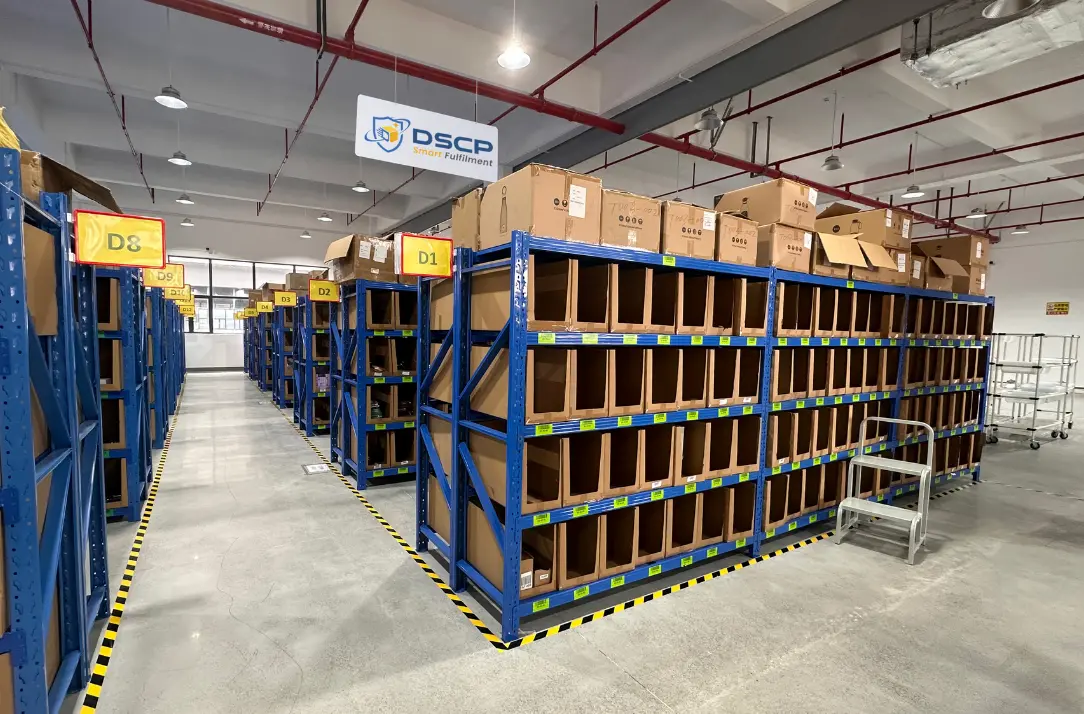
What Changes After You Switch to US Fulfillment
Switching to US fulfillment is an operational upgrade, not just faster shipping. See how it changes forecasting, costs and customer retention.