
When to Send Q4 Inventory to a US Warehouse

Every summer, e-commerce sellers face the same question: do I send my Q4 inventory to a US warehouse now, or wait until closer to the holiday season? It feels like a simple timing decision. It is actually one of the most consequential financial and operational choices you will make all year, and getting it wrong in either direction costs real money.
Wait too long and you face higher freight rates, tighter carrier capacity, warehouse congestion and the risk of stockouts during the most profitable weeks of the year. Move too early and you tie up working capital in inventory that sits on a shelf for months, money that could have funded ads, product development or other growth. The right answer depends on your specific numbers, and this guide provides a clear framework for finding it.
The pressure to decide is real and it builds through the summer. Ocean freight rates typically climb 20 to 30% above baseline during the pre-Q4 booking window in August and September, with general rate increases and peak-season surcharges stacking week after week from September onward (Fulfillmen, 2026). The sellers who decide early, and decide correctly, lock in lower costs and guaranteed capacity while everyone else scrambles.

Key Takeaways
- Sending Q4 inventory to a US warehouse early can lower freight costs significantly, since ocean rates rise 20 to 30% during the August to September peak booking window.
- Early positioning secures warehouse space and carrier capacity before peak season congestion drives both into short supply.
- The trade-off is tied-up working capital: inventory sitting in a warehouse is cash you cannot use elsewhere.
- A simple formula helps you decide: weigh the extra holiday sales and margin you gain against the cost of the capital tied up in early inventory.
- The decision should be made SKU by SKU, prioritizing proven, stable sellers over unproven products.
The Case for Sending Inventory Early

There are three solid reasons to position your Q4 inventory in a US warehouse ahead of the rush.
Lower Freight Costs
Shipping costs are not constant through the year. They rise sharply as peak season approaches. Booking freight early, before the August and September surcharge stacking begins, can save meaningfully on a full container compared to booking at the peak. Early shipping also gives you the flexibility to choose slower, cheaper transit options like ocean freight instead of being forced into expensive expedited shipping when time runs short. For sellers moving full container loads, the difference between an early summer booking and a September booking can be substantial.
Secured Capacity and Warehouse Space
Freight capacity and warehouse space both tighten as Q4 approaches. Carriers fill up, peak season surcharges become standard and fulfillment centers push toward maximum racking utilization. Warehouses that run at 85% capacity in normal months can hit 95% or higher during peak, which is the difference between having room for your inventory and scrambling for overflow space at premium rates (Fengye Logistics, 2026). Positioning early means your inventory has a confirmed home and your orders have guaranteed fulfillment capacity before the crunch.
Faster Delivery and More Selling Days
This is the benefit sellers most often underestimate. When your inventory is already in a US warehouse close to your customers, you can deliver in two to four days the moment the holiday season opens. Sellers who wait and ship from distant locations during Q4 lose valuable selling days to transit time. Having stock positioned early can mean roughly ten extra days of peak-season selling compared to competitors still waiting on inbound shipments, and those ten days fall during the highest-converting period of the year.
Early positioning also gives you a restocking buffer. If a product sells faster than expected during Q4, having inventory already in the country lets you replenish quickly instead of watching a bestseller go out of stock at the worst possible time. We covered the full cost of that scenario in our guide on handling demand surges without stockouts.
The Case for Waiting

Sending inventory early is not automatically the right move. There is a real cost on the other side of the ledger, and it is the reason this decision requires actual math rather than a blanket rule.
The main argument against early positioning is tied-up working capital. Every dollar of inventory sitting in a warehouse from July waiting for November is a dollar you cannot spend on advertising, new product development, supplier deposits, or any other use that might generate a faster return. For cash-constrained sellers, that opportunity cost is high.
There is also demand risk. If you commit a large quantity early and the product underperforms during Q4, you are left holding excess inventory and paying storage fees on goods that are not moving. Industry data has flagged this exact risk: when brands front-load inventory and consumer demand decelerates, the working capital tied up in that stock sits on the balance sheet far longer than planned (The Supply Chain Xchange, 2025). Early positioning rewards confidence in your forecast and punishes guesswork.
This is why the decision is rarely all-or-nothing. The smartest approach is usually selective: send your proven winners early and hold back or stagger the rest.
| Factor | Send Early | Wait |
|---|---|---|
| Freight Cost | Lower; books before 20-30% peak season rate climb | Higher; competes with peak demand and surcharges |
| Warehouse Space | Secured before capacity tightens | Risk of overflow fees or no space available |
| Delivery Speed | 2 to 4 days from day one of the season | Selling days lost to inbound transit time |
| Restock Buffer | Stock on hand to replenish fast movers | Stockout risk if a product takes off |
| Working Capital | Tied up in inventory for months | Free to deploy on ads, product or growth |
| Demand Risk | Higher exposure if a product underperforms | Lower; commit only once demand is clearer |
A Simple Formula to Decide
After working through this decision with many sellers, the cleanest way to evaluate it comes down to a single comparison. Weigh what you gain from early positioning against what it costs you in tied-up capital:
Is early prep worth it = Extra holiday sales × Average profit margin − Cost of tied-up capital
If the result is positive, sending inventory early is likely worth it. If it is negative, you are better off sending a smaller quantity first or splitting your shipments into staggered batches.
Here is how to think about each input:
- Extra holiday sales is the additional revenue you expect to capture by having stock available faster, including the extra selling days and the sales you would otherwise lose to stockouts.
- Average profit margin converts that extra revenue into actual profit, since revenue alone is not the gain.
- Cost of tied-up capital is the opportunity cost of the cash committed to early inventory: what that money could have earned if deployed elsewhere, plus any additional storage fees for the early months.
The formula forces you to be honest about both sides. A proven bestseller with strong margins and high stockout risk almost always justifies early positioning. An unproven product with thin margins usually does not.
Make the Decision SKU by SKU

The biggest mistake sellers make is treating Q4 inventory as a single decision. It is not. It is a series of decisions, one per product, and the right answer varies across your catalog.
Apply this logic:
- Send early: Proven bestsellers with at least three months of stable demand, healthy margins and high holiday relevance. These are the SKUs where a stockout would cost the most and where the formula reliably comes out positive. Stable demand history is what lowers the risk and makes early investment pay off.
- Stagger or send smaller quantities: Mid-tier products with moderate, less predictable demand. Send an initial batch early to secure availability, then replenish based on how Q4 actually unfolds.
- Wait or skip early positioning: New or unproven products without a sales track record. The demand risk is too high to justify tying up capital months in advance. Test these closer to the season with smaller quantities.
This SKU-level approach captures most of the upside of early positioning while limiting your exposure to the downside. You protect your proven revenue drivers and avoid over-committing on the uncertain ones.
| Product Type | Decision | Why |
|---|---|---|
| Proven bestseller, 3+ months stable demand, healthy margin | Send early | Highest stockout cost and clearest payoff; formula reliably positive |
| Mid-tier product, moderate or less predictable demand | Stagger | Secure an initial batch early, then replenish as Q4 unfolds |
| New or unproven product, no sales track record | Wait or test | Demand risk too high to tie up capital months ahead |
| Bulky or low-margin product | Wait or stagger | Storage and capital costs erode the thin margin if it sits |
When to Act
For sellers using ocean freight, the practical window to position Q4 inventory runs from roughly July through August. This timing lets you book before the steepest peak season surcharges hit and ensures your goods arrive and are received well before the holiday demand begins. Waiting until September often means paying premium freight rates and competing for warehouse space that is already filling up.
Starting the conversation with your fulfillment partner early matters too. Warehouses build their peak season capacity plans in the summer, and coordinating your inbound volume in advance ensures your inventory has a confirmed place when it arrives. If you are evaluating your overall holiday readiness, our peak season e-commerce checklist walks through the full preparation timeline.
Plan Your Q4 Positioning With a Partner
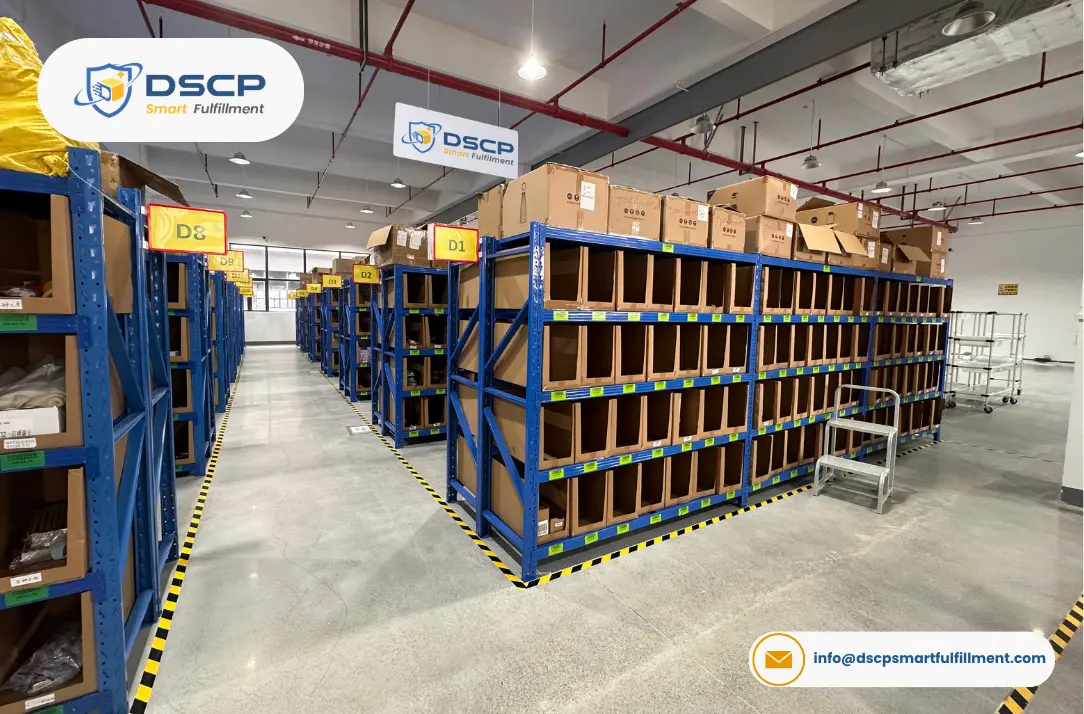
Deciding what to send early is your call. Executing it smoothly is where a fulfillment partner earns its value. DSCP Smart Fulfillment helps brands position Q4 inventory across US warehouses in Chino, California, and New Brunswick, New Jersey, giving you bi-coastal coverage, fast delivery during the holiday rush and the flexibility to restock quickly when a product takes off. If you are planning your holiday inventory now, get in touch to coordinate your Q4 positioning before peak season pricing and congestion set in.
Conclusion
Sending Q4 inventory to a US warehouse early is not automatically right or wrong. It is a calculated trade-off between the savings and selling advantages of early positioning and the opportunity cost of tied-up capital. The sellers who get it right do not guess. They run the numbers product by product, send their proven winners early to lock in lower freight costs and more selling days, and stagger or hold the rest to manage risk.
The freight rates climb and the warehouse space tightens a little more every week from now through September. If you are going to position early, the window to act is this summer. Run the formula on your top SKUs, make the call and get your proven sellers in place before the rush makes everything more expensive.

How to Start a Skincare Brand: A US Launch Checklist
A step-by-step US launch checklist for new skincare brands: choosing a formula, FDA and MoCRA rules, labels, barcodes, real launch fees and fulfillment.
What Changes After You Switch to US Fulfillment
Switching to US fulfillment is an operational upgrade, not just faster shipping. See how it changes forecasting, costs and customer retention.