
How to Start a Skincare Brand: A US Launch Checklist
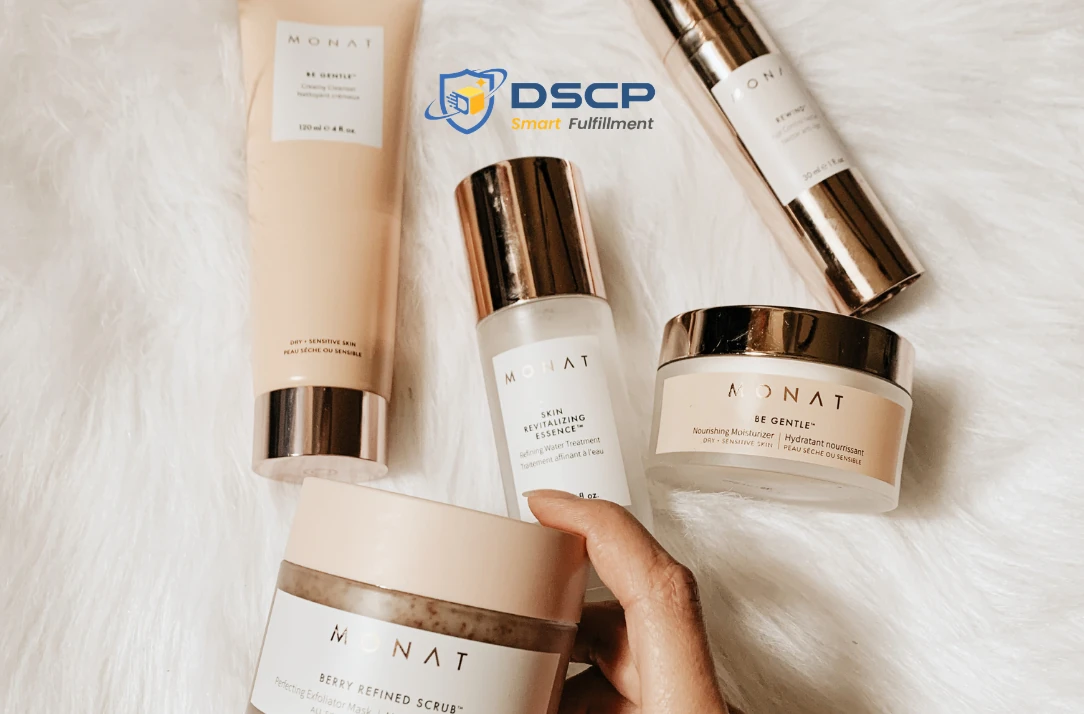
To start a skincare brand in the US, pick one skin concern and one to three hero products, choose a private label or custom formula, meet FDA’s MoCRA rules, print a compliant label, set up the business and an online store, then plan how orders will reach customers. Demand is there: US prestige skincare sales grew 9% in the first half of 2026, the fastest of any prestige beauty category, while mass beauty grew 7% to $39.2 billion (Retail Dive, 2026).
Most launch guides stop at branding and social media. The launches that stall usually stall later, on compliance, on costs nobody budgeted or on the first rush of orders. This checklist covers all of it, from the formula to the moment a parcel leaves the warehouse, including when beauty fulfillment starts to make more sense than packing orders yourself.
Key Takeaways for Starting a Skincare Brand
- Launch with one to three products that solve one skin concern. A focused range is cheaper to make, easier to market and builds repeat orders faster.
- Private label gets you to market in weeks with a proven formula. A custom formula takes longer and costs more but is harder to copy.
- FDA does not approve cosmetics or license cosmetics companies, but you are legally responsible for safety and labeling, and MoCRA adds filings and adverse event reporting.
- The fixed fees are small: MoCRA filings are free, a trademark starts at $350 per class and a single barcode costs $30.
- Ship the first orders yourself to learn your packing, then move to a 3PL once order volume starts taking over your week.
What Does It Take to Start a Skincare Brand?
Starting a skincare brand means turning a formula into a legal, sellable and shippable product under your own name. In the US that involves five pieces of work: choosing a product range and a manufacturing route, meeting FDA cosmetic rules under the Modernization of Cosmetics Regulation Act (MoCRA), designing a compliant label and packaging, protecting the business with a trademark and insurance and building a sales and fulfillment setup that gets orders to customers quickly.
Start With One Problem and One to Three Products
The brands that last rarely launch with a full routine. They pick one problem, such as dullness, sensitivity or breakouts, and solve it with one to three products that customers can understand in a sentence. A cleanser, a serum and a moisturizer built around one concern is a complete starting range.
A focused range also pays off once orders start. Fewer products means smaller first production runs, less cash tied up in stock and faster reorders of the items that sell. Skincare is used up and bought again, so a hero product that works becomes a repeat order every month or two, and repeat orders are what make a small brand profitable.
Decide How Your Products Will Be Made
There are two ways to get a formula, and the choice shapes your budget, your timeline and how easy your brand is to copy. The trade-offs are the same ones covered in our comparison of white label vs private label products, applied to skincare.
| Private label | Custom formula | |
|---|---|---|
| What it is | A tested formula from a manufacturer, sold under your brand | A formula developed for you by a cosmetic chemist or contract manufacturer |
| Time to market | Usually weeks | Usually many months, including stability testing |
| Upfront cost | Lower | Higher |
| Minimum order | Often low | Usually higher |
| How easy to copy | Other brands may sell the same base formula | Unique to your brand |
| Best for | Testing demand quickly | A brand built on a signature formula |
Whichever route you choose, ask the manufacturer for the safety evidence behind each product, the full ingredient list in standard names and the facility’s FDA registration status. You will need all three for compliance.
What FDA Requires, and What It Does Not
FDA does not approve cosmetic products before they go on sale, does not license cosmetics companies and does not require animal testing (US Food and Drug Administration, 2025). What it does require is that the company named on the label makes sure each product is safe and properly labeled, and keeps records that back up its safety.
✕ An FDA license for your business
✕ Animal testing
✕ Facility registration and product listing, if you qualify as a small business*
✓ A label with your name and street address
✓ Reporting serious adverse events to FDA
✓ FDA-approved color additives only
✓ No drug claims on a cosmetic
MoCRA adds a short list of duties: facility registration and product listing, safety substantiation records, reporting serious adverse events within 15 business days and a US-reachable contact on the label. Brands with average US cosmetics sales under $1 million a year are exempt from registration and listing, except for products such as eye-area or long-wear items. Our guide to MoCRA requirements explains each duty and who files what.
The line to watch is between a cosmetic and a drug. A moisturizer that hydrates is a cosmetic. Add SPF, or claim it treats acne, and it becomes a drug with far stricter rules. Write your claims before you design the label, not after.
Get the Label Right Before You Print
A US cosmetic label needs the product identity, net quantity in US units, ingredients in descending order using accepted names and the name and street address of the manufacturer, packer or distributor. FDA notes that a P.O. box or a website alone is not enough for that address (US Food and Drug Administration, 2025). Labels must also carry a contact through which customers can report adverse reactions. If you are adapting an existing EU label, the cosmetic labeling requirements checklist covers every change.
Print a small first run of labels. The first round of feedback often changes a claim or a size, and a warehouse full of outdated labels is an expensive lesson.
Set Up and Protect the Business
The paperwork is the same as for any product business, with two extra items that matter more in skincare.
- Register the business. Form a legal entity such as an LLC in your state and get the local licenses and tax registrations your state requires. FDA does not license cosmetics firms, but state or local authorities may.
- Protect the name. A US trademark application costs $350 per class of goods at the USPTO, before any surcharges (US Patent and Trademark Office, 2026). Check the name is free before you print anything.
- Get insured. Product liability insurance covers the cost if a product injures someone, and the SBA lists it as the cover for businesses that make or sell products (US Small Business Administration, 2026). Skincare touches skin every day, so treat it as essential.
- Open a business bank account. Keeping brand money separate makes your real cost per order easy to see from day one.
Packaging and Barcodes
Packaging has two jobs: sell the product on a screen and survive the trip to the customer. Pumps, airless bottles and sealed jars cost a little more but leak far less in transit, and our guide on how to ship cosmetics covers the packing that keeps them intact.
Barcodes matter as soon as you sell through marketplaces or retailers. GS1 US licenses a single barcode for $30 with no annual fee, or a block of 10 for a $250 initial fee and $50 a year, and every shade or size needs its own number. Small items such as lip products can use the shorter UPC-E barcode (GS1 US, 2026).
What It Costs to Launch a Skincare Brand
There is no single launch budget, because your manufacturer, packaging and order quantities decide most of it. What you can pin down are the fixed fees, and they are smaller than many founders expect.
Budget the variable costs on your first production run rather than on hopes for year one. A small run of one to three products, sold out and reordered, teaches you more than a large run of ten products that sits on a shelf.
Set Up Your Store and Plan Fulfillment
Most new skincare brands sell through their own Shopify store, often alongside social channels. Keep the setup simple at launch: a clear product page per hero product, honest claims, shipping costs shown early and a returns policy written before the first order.
For the first orders, packing them yourself is the right call. You learn how your products travel, what customers say on unboxing and which questions come up. Once orders take hours out of every week, or you need faster delivery to customers on the other coast, outsourcing usually becomes cheaper than it looks. The in-house vs 3PL cost comparison shows where that crossover sits, and a Shopify fulfillment partner connects to your store so orders flow to the warehouse automatically.
How DSCP Smart Fulfillment Helps New Skincare Brands
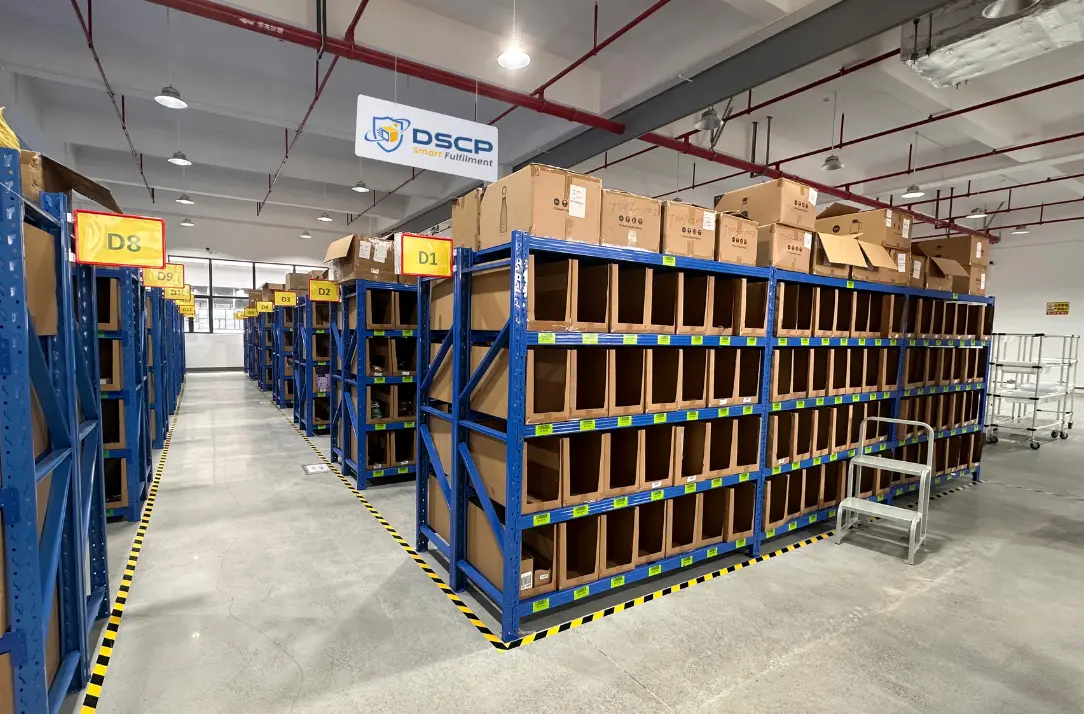
DSCP Smart Fulfillment works with skincare brands from their first steady orders onward, from two US warehouses in New Brunswick, New Jersey and Chino, California that reach about 80% of the US population in two to four days by ground. Our cosmetics fulfillment service is built for focused beauty brands:
- Shopify built in: our native Shopify app syncs orders, stock and tracking in real time.
- Your packaging, every time: boxes, inserts and tissue applied to one written standard, with routines and gift sets built as a single SKU.
- Fast, accurate shipping: orders released by 5 PM EST ship the same day at 99.9% pick and pack accuracy.
- Pricing you can predict: competitive, published rates with no hidden fees.
- A real contact: a dedicated account manager who knows your products from the first shipment.
Plan Your Launch With Us
Tell us what you are launching and roughly how many orders you expect, and we will show you what fulfillment would cost per order, line by line, before you commit. Get in touch to plan it.
Conclusion
Starting a skincare brand in the US is more achievable than it looks from the outside. There is no FDA approval to wait for and the fixed fees are small. The work is in the details: a focused range, safety evidence for every product, a label that follows US rules, the right protection for the business and a plan for shipping orders well.
Launch small, learn from the first orders and reorder what sells. When packing starts to crowd out the rest of the business, a skincare fulfillment partner can take over the shipping while you focus on the brand.
What Changes After You Switch to US Fulfillment
Switching to US fulfillment is an operational upgrade, not just faster shipping. See how it changes forecasting, costs and customer retention.
9 Shopify Apps Every New Store Should Install in 2026
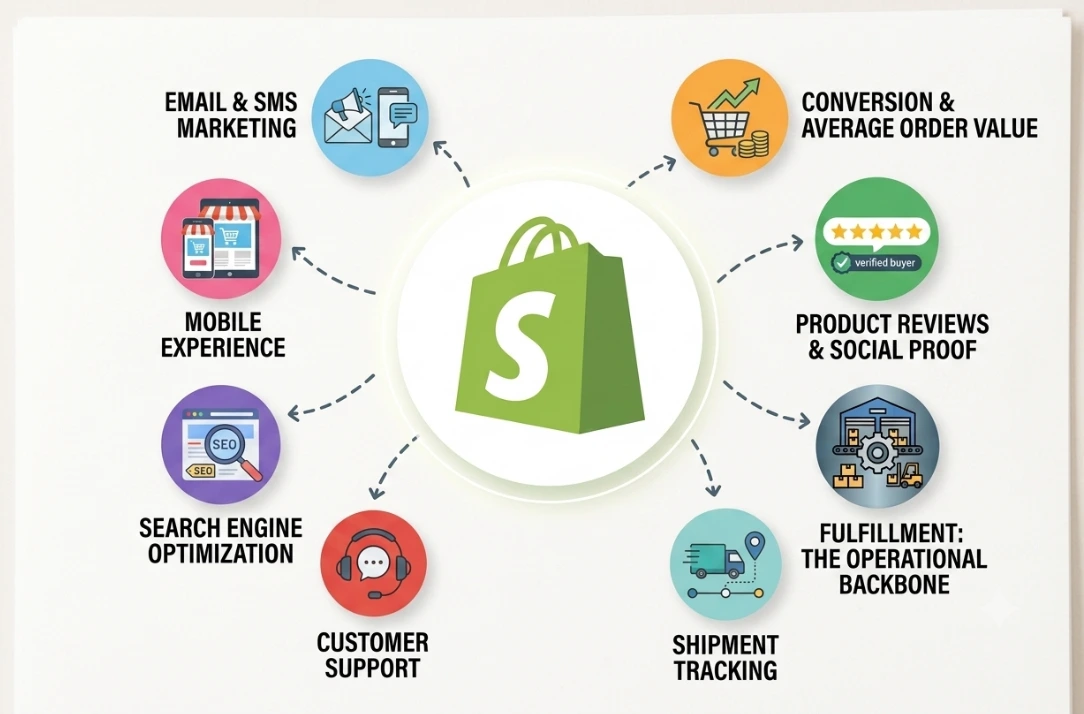
The 9 best Shopify apps every new store needs in 2026, organized by job, from email and reviews to fulfillment. Build a lean stack that actually performs.